


If you or a loved one has been arrested for driving under the influence (DUI) in Las Vegas or elsewhere in Nevada, you are likely feeling overwhelmed and scared. However, an arrest is not a conviction.
Just because you failed a breathalyzer or were taken into custody does not mean you are guilty in the eyes of the law. Nevada’s DUI statutes are complex, involving both criminal court proceedings and administrative DMV battles, but they also offer numerous avenues for defense.
Even if you decide to enter a guilty or no contest plea for a first-time DUI, our DUI lawyers can usually persuade judges to suspend any jail sentence as long as you pay the fine, attend DUI School and a Victim Impact Panel, and avoid any new arrests while the case is open.
Plus, you can usually keep driving during your driver’s license suspension as long as you have an ignition interlock device (IID) in your car.
In this article, our Las Vegas criminal defense attorneys break down the top 10 critical facts you need to know about Nevada DUI laws and penalties—including recent 2025 legislative updates—and how we can help you fight to protect your freedom and your future.
- 1. Penalties Get Worse With Each DUI
- 2. DUIs Open a DMV Case
- 3. You Can Be Sober and Guilty
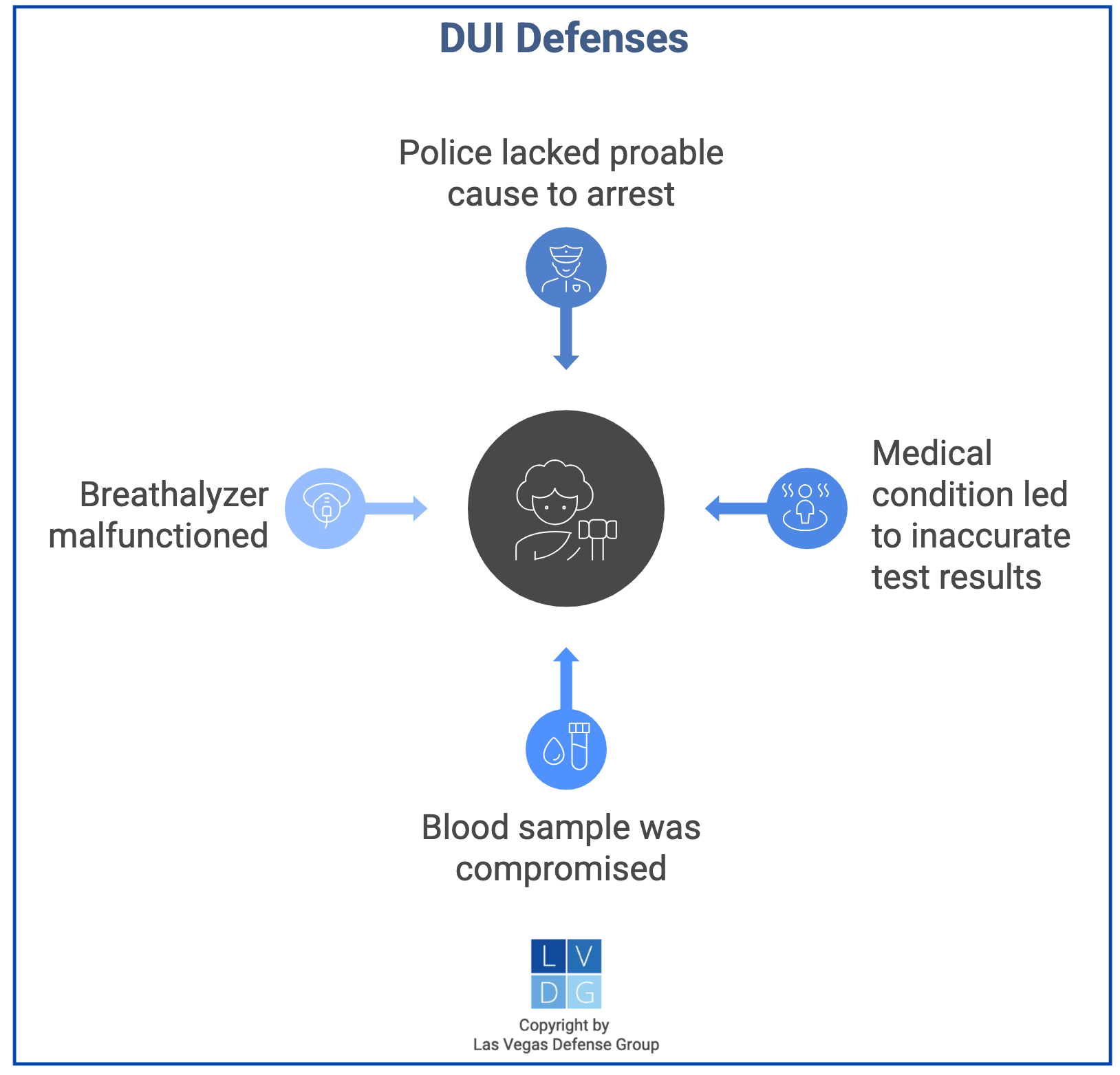
- 4. Police Need Probable Cause to Arrest You
- 5. Nevada Has a Two-Hour Rule
- 6. There Is a Washout Period
- 7. You Can Get a DUI by Sleeping
- 8. DUIs Can Be Fought
- 9. Some Courts Offer Rehab Instead
- 10. Some DUIs Can Be Sealed
- Frequently Asked Questions
- Additional Reading
1. Penalties Get Worse With Each DUI
DUI is usually a misdemeanor in Nevada, though it is also a “priorable” crime. This means the punishment gets harsher with each successive offense in a seven-year period.
In addition, DUI causing substantial bodily harm is always a felony, even if you have an otherwise clean driving record. Then once you are convicted of a felony DUI, any ensuing DUI is an automatic felony too – even if no one was hurt.
The following table spells out the possible criminal sentences under Nevada DUI law.
|
Nevada DUI Offense |
Penalties |
| DUI 1st (in seven years) – NRS 484C.400 | Misdemeanor:
|
| DUI 2nd (in seven years) – NRS 484C.400 | Misdemeanor:
|
| DUI 3rd (in seven years) – NRS 484C.400 | Category B felony:
|
| DUI causing substantial bodily injury or death – NRS 484C.430 | Category B felony:
|
| DUI after felony DUI conviction – NRS 484C.410 | Category B felony:
|
Note that if your license gets revoked, the Nevada DMV usually permits you to keep driving during the revocation period as long as you have an ignition interlock device (IID) installed in your vehicles.
Also note that felony DUI convictions are non-probationable. This means prison is mandatory unless you are accepted into Felony DUI Court, an intensive rehab program.
Finally, note that Nevada’s drinking and driving laws are harsher when there is a child under the age of 15 in the vehicle. For instance, the judge in a first-time drunk driving case may order the maximum fine of $1,000 instead of a lesser amount.1
2. DUIs Open a DMV Case
Once you are arrested for DUI in Las Vegas or elsewhere in the state, you are prosecuted in criminal court as well as administrative court at the DMV. Whereas criminal court can levy fines and incarceration (as discussed above), all the DMV has jurisdiction over is your driving privileges.
If you opted to take the breath test following your DUI arrest, you will immediately have your driver’s license swapped out with a temporary permit valid for seven days. If you instead agree to take the blood test following your DUI arrest, you keep your license until the test results arrive by certified mail with the seven-day temporary permit enclosed.
Before those seven days are up, we must request a hearing with the DMV to contest the license revocation. Once we do, you can continue driving on the temporary permit until the DMV hearing (which is usually one or two months later). If you miss the deadline, the revocation takes hold after the seventh day.
Even if we win the DMV hearing, the DMV will still revoke your license if you end up getting convicted in the criminal case; and vice versa. The only way to avoid a license revocation is to win both the DMV and criminal cases, making the role of a criminal defense lawyer all the more critical.
As discussed above, the Nevada DMV imposes a:
- 185-day license revocation for a first-time DUI,
- 1-year revocation for a second-time DUI, and
- 3-year revocation for a third-time DUI and any other felony-level DUI.
Costs and Fees
The only way to drive during your driver’s license revocation period is to have an ignition interlock device (IID) installed in all your vehicles. This usually costs up to $170 to install and another $120 monthly to maintain.
To get back your license, you will also have to pay a $121 reinstatement fee, $42.25 driver’s license fee and $26 testing fee for vision, knowledge, and possibly skills.
You also must maintain SR-22 insurance for three years as a condition of getting your Nevada driver’s license reinstated. It costs about $260 to $380 a month plus an initial filing fee of around $25.
This is all in addition to any towing and daily impound fees you may have racked up following your arrest.
Refusing the Chemical Test
Nevada has an implied consent law. This means that by driving on state roads, you must consent to an evidentiary breath test or evidentiary blood test following your DUI arrest.
If you refuse to take a breath or blood test following a DUI arrest, the officer can get a warrant to draw your blood by force. If your drunk driving case goes to trial, prosecutors can use your refusal as evidence of your guilt.
The most important consequence of a chemical test refusal is that the DMV will suspend your license for one additional year. This is true even if you end up winning your criminal case. (If you have a prior refusal in the past seven years, the suspension will last three years.)2

Among the most common Nevada crimes are drunk driving or drugged driving.
3. You Can Be Sober and Guilty
You can be convicted of DUI in Nevada even if you feel sober and are driving safely. In fact, operating an automobile, motorcycle, or other motor vehicle is automatically a crime if either:
- Your blood alcohol concentration (BAC) is .08% or greater within two hours of driving (called “per se” DUI); or
- You have more than the lawful limit of certain drugs in your blood (called DUI of drugs/DUID); or
- You are impaired by alcohol and/or drugs despite having a lawful BAC of below .08%.
Note that for commercial drivers, the lawful BAC limit is below .04%. If you are under 21, it is below .02%.
These laws apply everywhere the public has access, except private roads and driveways.3
4. Police Need Probable Cause to Arrest You
When Nevada police patrol the streets for drunk drivers – particularly during Las Vegas DUI blitzes or checkpoints – they are looking for these common signs of intoxication:
- speeding or driving too slowly,
- accelerating or decelerating quickly,
- abrupt stops or slow starts,
- driving at night or during inclement weather without headlights/taillights,
- difficulty maintaining lanes (swerving, weaving, or straddling),
- making wide, quick, or unlawful turns,
- tailgating, or
- driving with your face near the windshield or displaying lack of peripheral vision.
In the meantime, the police’s dashcam footage is recording your driving and license plate number. If you are pulled over, police are specifically looking to see if you:
- have glassy or bloodshot eyes,
- are slurring your speech,
- smell of alcohol or marijuana,
- have difficulty retrieving your license, registration, and insurance,
- have alcohol or drugs in the car visible through the driver’s side window, or
- admit to drinking or taking drugs (which you should never do).
For lesser violations, you may need the help of a traffic ticket lawyer. However, if police suspect you may be under the influence of alcohol or drugs, they will ask you to submit to a mandatory preliminary breath test (PBT). You will also be asked to perform three optional field sobriety tests (FSTs), which our drug possession lawyers suggest you politely decline:
- horizontal gaze nystagmus (HGN) eye test,
- walk-and-turn (WAT), and
- one-leg stand (OLS).
If by that point the police believe there is probable cause you committed DUI, they will arrest you and book you at the police station.
In truth, most of the above-mentioned driver behaviors and actions can have non-DUI-related causes. They could be the result of driver fatigue, distracted driving, or medical conditions that mimicked intoxication or caused inaccurate breath test results. Part of our job is to try to show that the police lacked sufficient evidence to arrest you for DUI.4
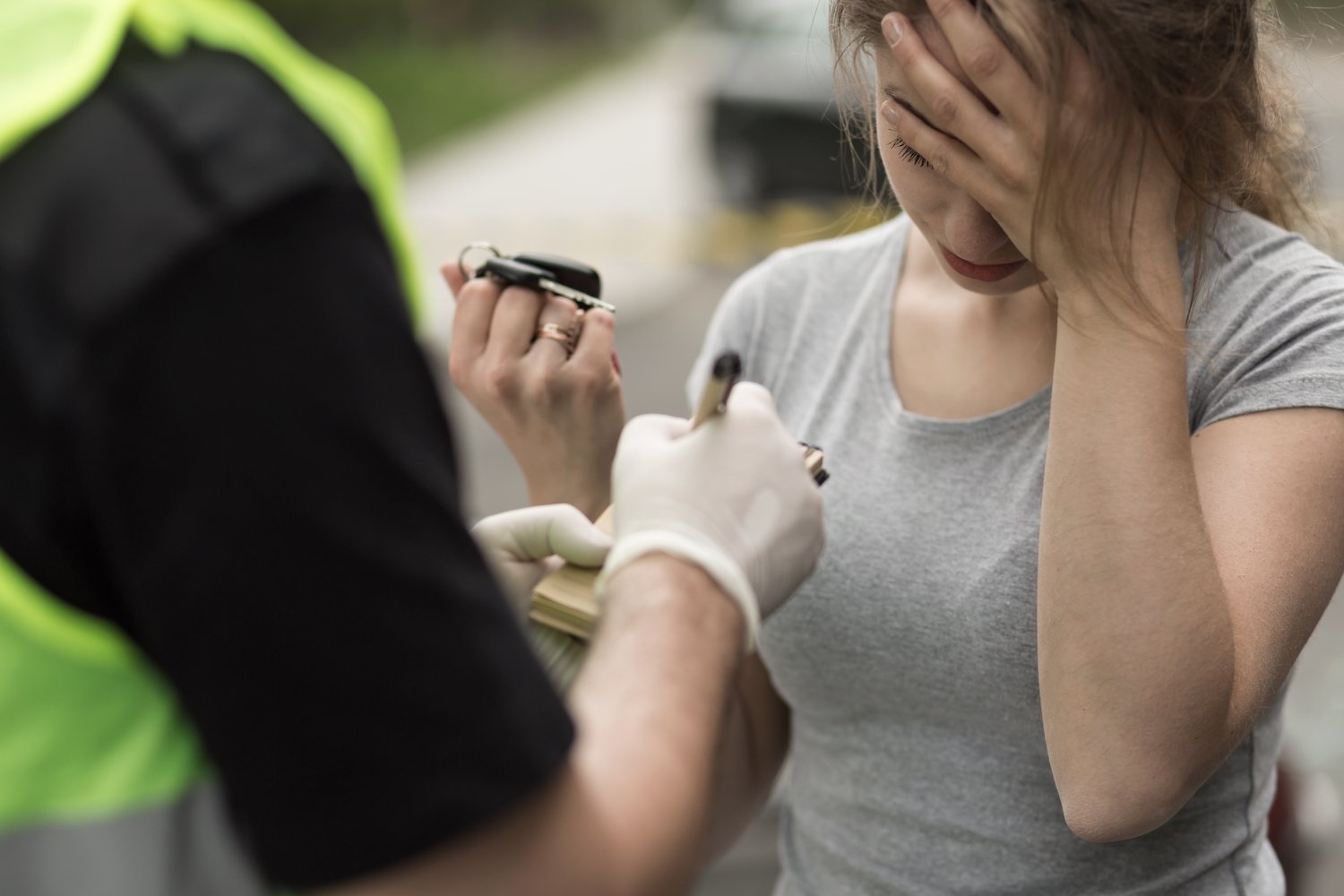
During a Las Vegas DUI investigation, police may ask suspects to take a roadside breathalyzer test and perform field sobriety tests.
5. Nevada Has a Two-Hour DUI Rule
In Nevada, the two-hour rule means you can be convicted of DUI if your BAC reaches .08% or higher at any time in the two hours after you stop driving. It does not matter if you were driving safely at the time.
If you were tested after the two-hour window, the court can still consider the results as evidence. The results just will not carry as much weight.
Note that the officer must take two consecutive breath samples if you choose the breath test. A third sample will be taken if the results are more than .02% apart.
Meanwhile, if you choose the blood test, you have the option of paying for a qualified healthcare provider of your choosing to administer it. We advise you to exercise this right in the hopes that the independent lab shows that your BAC was below the legal limit. This is evidence we can then show to the court.5
6. There Is a Washout Period
When Nevada prosecutors determine whether to charge you with a first, second, or subsequent drunk driving offense, they look back only seven years. Any misdemeanor DUIs you may have had more than seven years ago will not count against you.
This means if you have been convicted of any misdemeanor DUIs within the last seven years, they will count as “priors” should you get arrested for driving under the influence again. It does not matter in which U.S. state or territory these past convictions occurred.
This seven-year look-back period applies only to misdemeanor DUIs. Once you get convicted of felony DUI, any subsequent cases are automatically charged as felonies. It does not matter how long ago or where the original felony conviction occurred.6

A common condition of DUI Court is random drug tests.
7. You Can Get a DUI by Sleeping
A common case we see in Las Vegas involves people who know they are too intoxicated to drive and decide to “sleep it off” through the night in their car. Then the police find and wake them, smell that they have been drinking, and arrest them for drunk driving, even though they were not driving at all.
In these cases, prosecutors argue that these sleeping defendants:
- were in “actual physical control” of the vehicle even though they were not driving when they were found;
- were likely driving drunk before they decided to pull over and park; and
- can be convicted of DUI even though the police did not witness them driving, as in typical drunk driving cases.
We have had great success in getting these “sleeping DUI” cases dismissed if we can show the following:
- When the police found you, you were not in the driver’s seat. Perhaps you were in the passenger seat or the backseat instead;
- The engine was off, and there was no key in the ignition;
- Your car was legally parked when the police found you; and
- There is evidence indicating that you did not drive the vehicle to that location while impaired.
It would also be helpful in your case if your car were parked on private property, and the headlights were off.7
8. DUIs Can Be Fought
NRS DUI statutes forbid prosecutors from reducing or dismissing DUI charges unless their case against you is weak. So our job is to show these prosecutors that their evidence has too many holes to hold up at trial.
Ideally, we can persuade the prosecutor to dismiss the drunk/drugged charge completely or else reduce the charge to reckless driving. There are various defenses, such as:
- The blood test or breath test was defective,
- You were never in actual physical control of the vehicle,
- The police officer did not have reasonable suspicion to make a traffic stop,
- Law enforcement did not have probable cause to make a DUI arrest,
- The field sobriety tests were not administered in accordance with NHTSA guidelines (short for the National Highway Traffic Safety Administration), or
- Your intoxication was not the “proximate cause” of the accident; instead, the fault lies with superseding or intervening factors (such as bad weather or roads).8
Prosecutors have the high burden to prove your guilt beyond a reasonable doubt should the case go to trial. As long as we can raise that reasonable doubt as to just one “element” of the crime, the government may be willing to drop the case.
Felony DUI convictions are unsealable in Nevada.
9. Some Courts Offer Rehab Instead
Some Nevada courts permit eligible defendants to undergo DUI Court, an intensive rehabilitation program instead of jail or prison. If you complete the program, your DUI charge will be reduced to a lesser offense.
In Las Vegas for example, eligible first- and second-time DUI defendants can do DUI Treatment Court, a one-year program. Meanwhile, people facing felony DUI charges may be eligible for Felony DUI Treatment Court, a three-year program. Common conditions include:
- random drug testing (urine),
- electronic monitoring,
- victim impact panel,
- individual and group counseling for substance abuse,
- substance abuse treatment if necessary,
- court appearances,
- check-ins with a case manager,
- attendance at community sober support meetings (usually twice a week),
- keeping an ignition interlock device in your cars during the entire program.
We can help you through the process of applying to a DUI Treatment Court program.9
10. Some DUIs Can Be Sealed
Misdemeanor DUI convictions must remain on your Nevada criminal record for seven years before you can petition the court for a record seal. Meanwhile, felony DUI convictions are unsealable: They remain on your record forever.
Note that any misdemeanor or felony DUI charge that gets dismissed can be sealed right away.10 Learn how to seal Nevada DUI records.

The odds of getting DUIs reduced or dismissed are much higher if you have experienced criminal defense attorneys fighting for you.
Frequently Asked Questions
Will I go to jail for a first-time DUI?
In most cases, no. While the law allows for up to six months in jail, judges typically grant a suspended sentence. This means you avoid jail time as long as you complete DUI school, pay your fines, and stay out of trouble.
What is the new “20-day rule” for second offenses?
Under the recently updated law (SB 309), if you are convicted of a second DUI within seven years, the mandatory minimum jail sentence is now 20 days, up from the previous 10 days. Residential confinement (house arrest) may still be an option depending on the judge.
Can I be convicted of DUI if I was sleeping in my car?
Yes. You can be convicted of being in “actual physical control” of the vehicle even if you were asleep. However, defenses exist—such as proving the engine was off, the keys were not in the ignition, or you were in the back seat.
Do I need special insurance to get my license back?
Yes. After a license revocation, the DMV requires you to obtain SR-22 insurance (a certificate of financial responsibility) for three years. This often costs $260 to $380 per month, significantly more than standard coverage.
Can I refuse a breath or blood test?
You can, but it is not recommended. Nevada has “implied consent” laws; refusing a test results in an automatic one-year license revocation by the DMV, even if you are later found not guilty in court. Police can also obtain a warrant to forcibly draw your blood.
How long does a DUI stay on my record?
A misdemeanor DUI stays on your criminal record for seven years before it can be sealed. A felony DUI conviction (such as a third offense or DUI causing injury) stays on your record forever and cannot be sealed.
Is a DUI always a misdemeanor?
No. A first or second DUI is usually a misdemeanor. However, it becomes a class B felony if it is your third offense in seven years, if you have a prior felony DUI, or if you caused substantial bodily harm or death. Felony DUIs carry mandatory prison time.
Can I get my DUI charge reduced?
Prosecutors cannot dismiss DUI charges without a valid reason, but a skilled DUI defense attorney can often negotiate a plea down to Reckless Driving. This saves you from a DUI conviction on your record but still carries eight points on your license.
What happens if I have a Commercial Driver’s License (CDL)?
The standards are stricter. The BAC limit for commercial drivers is below .04%. A first DUI conviction will result in your CDL being disqualified for one year, effectively ending your career during that time.
Do I really have to install a breathalyzer in my car?
Most likely. For a first offense with a BAC under 0.16%, the DMV typically requires an ignition interlock device (IID) for 185 days as a condition of driving. If you do not install it, you cannot drive at all during your suspension period.
Additional Reading About Nevada DUI Laws
Las Vegas Defense Group offers help with a wide range of criminal charges. Whether you need a domestic violence lawyer, help in a drug possession case, or defense against a DUI charge, you’ll find the resources you need on this website. For more information about Nevada DUI laws, see our related articles:
- DUI court process – a step-by-step guide of what to expect in your drunk driving criminal and DMV cases
- Violating DUI probation – an examination of the consequences of breaking the terms of your probation, including going to jail
- Marijuana DUI – a discussion of how you can be arrested for driving high even though recreational pot is now lawful in Nevada
- Boating under the influence – an overview of Nevada’s laws, penalties, and defenses for the crime of driving a watercraft while intoxicated
- DUI and auto insurance – a discussion of how traffic violations can cause your insurance premiums to increase
Legal References
- NRS 484C.110; NRS 484C.400; see also State v. Terracin (Nev. 2009) 199 P.3d 835; see also Sheriff, Clark County v. Burcham (Nev. 2008) 198 P.3d 326. Koenig v. State (Nev. 1983) 672 P.2d 37 (“So long as the court records [of prior DUI convictions] from such courts reflect that the spirit of constitutional principles is respected, the convenience of the parties and the court should be given considerable weight, and the court record should be deemed constitutionally adequate [to prove prior DUI convictions].”). Parsons v. State (Nev. 2000) 10 P.3d 836 (You do not need to prove prior DUI convictions at preliminary hearings). Dep’t of Motor Vehicles & Public Safety v. McLeod (Nev. 1990) 801 P.2d 1390 (“Neither this court nor the district court may substitute its judgment for that of the administrative agency as to the weight of the evidence on questions of fact.”). See also, for example, Smith v. State (Nev. 2024) 545 P.3d 716. SB 309 (2025). NRS 484C.420 – .440.
- NRS 484C.230; NRS 483.460. See also Galvan v. State (Nev. 1982) 655 P.2d 155 (“We are also inclined to construe our implied consent statute liberally in order to promote the legislative policy of removing intoxicated drivers from our state’s highways.”). See also Davis v. State (Nev. 1983) 656 P.2d 855 (“If a driver expressly and voluntarily consents to submit to a blood alcohol test, the test results are admissible not because of the implied consent law, but because of his express consent.”).
- NRS 484C.110; NRS 484C.120; NRS 484C.350; NRS 483.462.
- See, for example, Dixon v. State (1987) 103 Nev. 272.
- NRS 484C.11 . State v. Eighth Judicial Dist. Court of Nev. (Nev. 2021) 479 P.3d 1004. NRS 484C.200. NRS 484C.180.
- NRS 484C.420 – .440. AB 4 (2025). Whatley v. State (Nev. Feb 14, 2025) Docket No. 89087 (circumstantial evidence such as witness accounts and lack of other passengers was sufficient to prove the defendant exercised physical control over the vehicle while impaired, even without direct police observation of the driving).
- See, for example, Department of Motor Vehicles v. Torres (Nev. 1989) 779 P.2d 959 (the defendant was asleep behind the wheel).
- See, for example, Etcheverry v. State (1991) 107 Nev. 782.
- NRS 484C.320; NRS 484C.330; NRS 484C.340.
- NRS 179.245. NRS 179.255.