

Colorado Revised Statute § 18-4-203 prohibits second degree burglary, which is knowingly and unlawfully entering or remaining in a building or residence with the intent to commit a crime inside. It can be a felony or a misdemeanor, depending on the facts of the case.
Examples of second degree burglary include:
- Breaking into a neighbor’s house to steal a TV.
- Remaining in a store after it closes to steal merchandise undetected.
- Entering a party tent to steal a guest’s purse.
In this article, our Denver criminal defense lawyers will address the following issues regarding Colorado second-degree burglary laws.
- 1. Elements of CRS 18-4-203
- 2. Penalties
- 3. Defenses
- 4. Degrees of Burglary
- Frequently Asked Questions
- Additional Reading
1. Elements of CRS 18-4-203
For you to be convicted of second degree burglary in Colorado, prosecutors must prove the following three elements beyond a reasonable doubt:
- You knowingly broke into, trespassed onto, or remained unlawfully on a property;
- The property was a building or an occupied structure; and
- You had the intent to commit a crime against another person or property when you entered the property.
Note you can be convicted of 2nd-degree burglary for unlawfully remaining in a building even if you originally had permission to be there. An example is hiding in a department store bathroom until the store closes so you can steal.
Also note “breaking and entering” is not an essential element of 2nd-degree burglary. Walking through an unlocked door without permission in order to commit a crime inside is also burglary.1
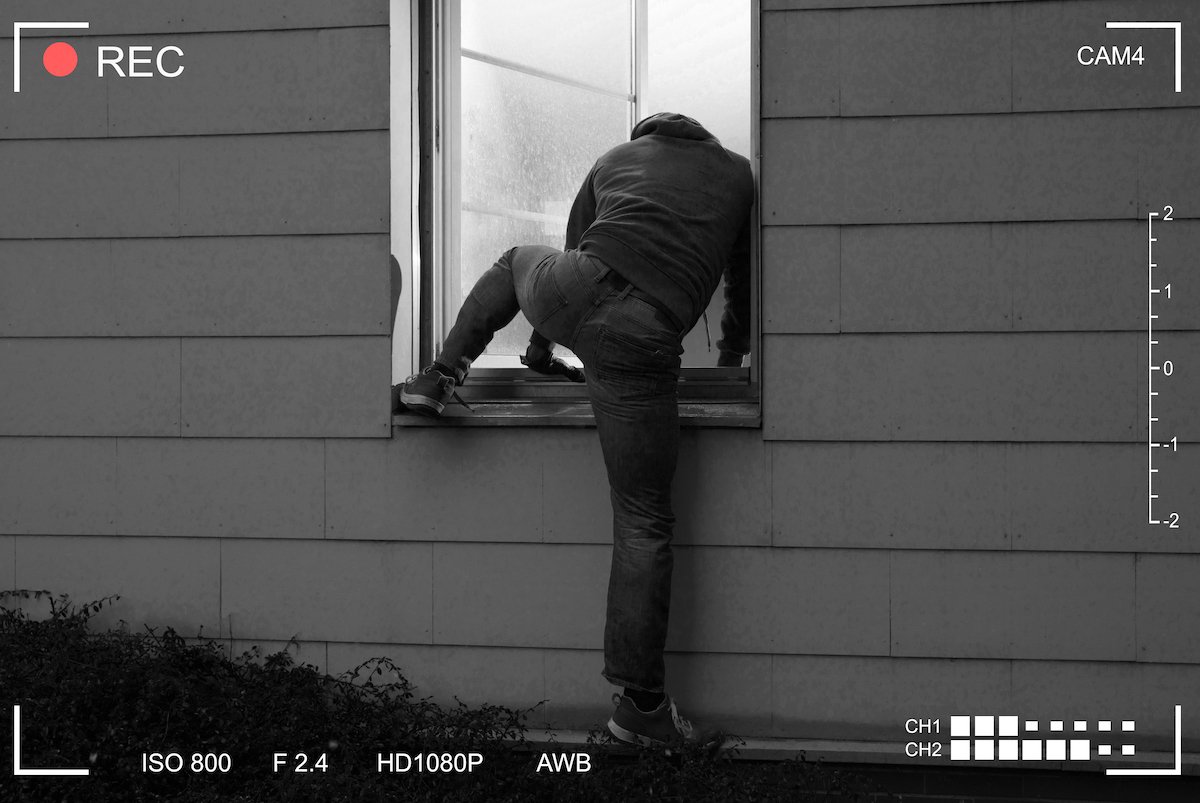
Intent to commit a crime while inside is a key element of second-degree burglary under CRS 18-4-203.
2. Penalties
The punishment for second-degree burglary under CRS 18-4-203 turns on the circumstances of the case.
Burglary of a Dwelling
Burglary of a dwelling is a class 3 felony in Colorado, punishable by:
- 4 to 12 years in prison and/or
- $3,000 to $750,000.
A “dwelling” is any home such as a house, apartment, trailer, or even a jail cell or a garage attached to a house.
Burglary of Drugs or Guns
Burglary is also a class 3 felony if the purpose is to steal either:
- A controlled substance lawfully kept within any building or occupied structure; or
- One or more firearms or ammunition.
These penalties are:
- 4 to 12 years in prison and/or
- $3,000 to $750,000.
Burglary of a Commercial Business or Occupied Structure
Burglary of a commercial building or occupied structure (that is not a dwelling) is slightly less serious. As a class 4 felony, this crime carries:
- 2 to 6 years in prison and/or
- $2,000 to $5,000 in fines.
Note that knowingly violating a written notice by a retailer – or a court order – specifically restraining you from entering a particular retail location during its business hours is charged as a class 2 misdemeanor, carrying:
- Up to 120 days in jail and/or
- Up to $750 in fines.
Other Cases
Burglary of a building in other cases not mentioned above is a class 5 felony, carrying:
- 1 to 3 years in prison and/or
- $1,000 to $100,000 in fines.2
The penalties for 2nd-degree burglary turn on the particulars of the case.
3. Defenses
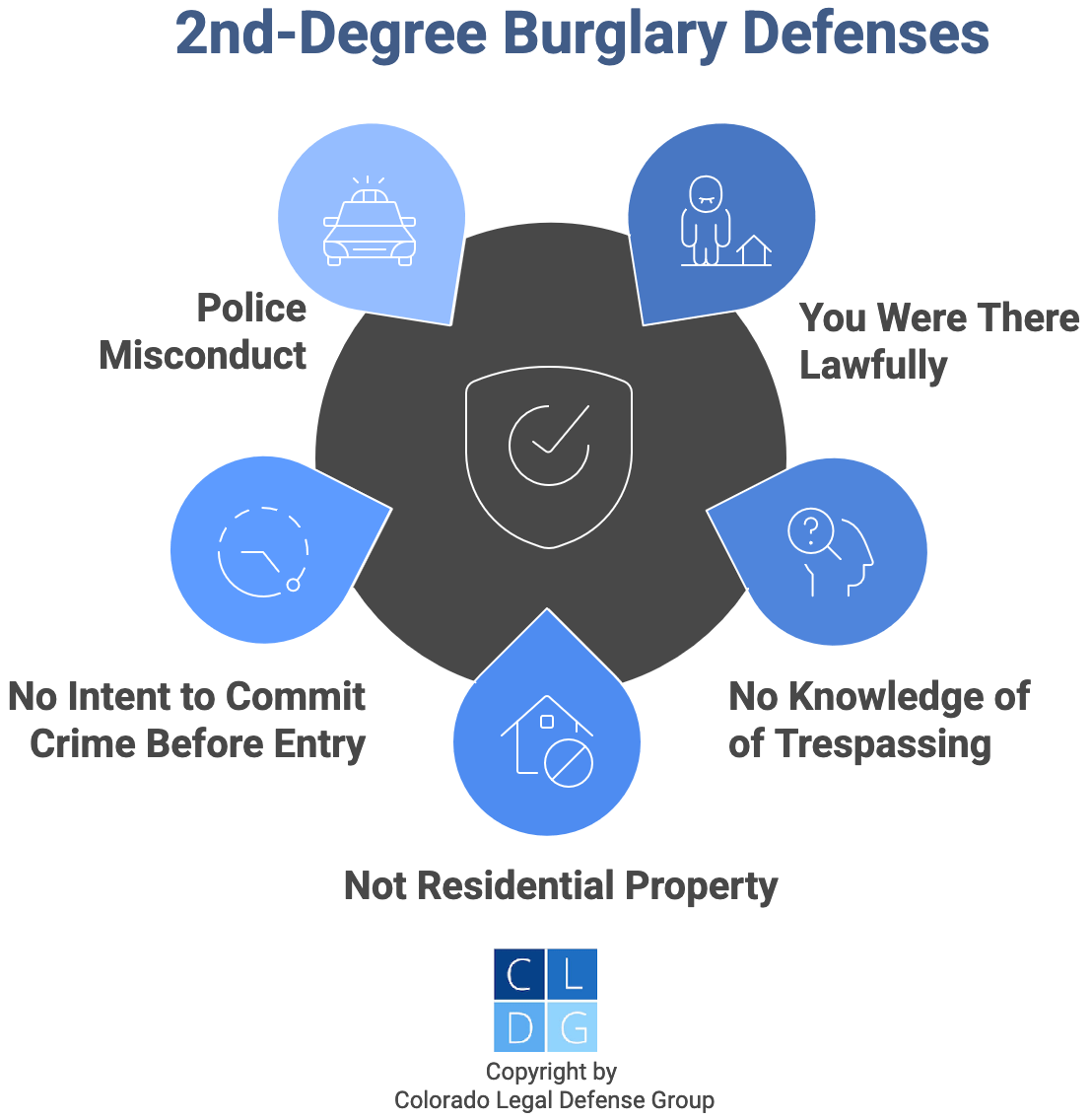
Here at Colorado Legal Defense Group, we have represented literally thousands of people charged with theft crimes such as second-degree burglary. In our experience, the following five defenses have proven very effective with judges, juries, and prosecutors at getting CRS 18-4-203 charges reduced or dismissed:
- You were lawfully on the property.
- You did not know you were unlawfully on the property.
- The building was not a dwelling (which may lead to a lesser penalty).
- Your intent to commit the crime was not formed until after you were already on the premises.
- Police misconduct occurred during the case, such as an unlawful search or coerced confession.
Common evidence in these cases includes video footage (such as from Ring cameras), eyewitness accounts, and any relevant recorded communications.
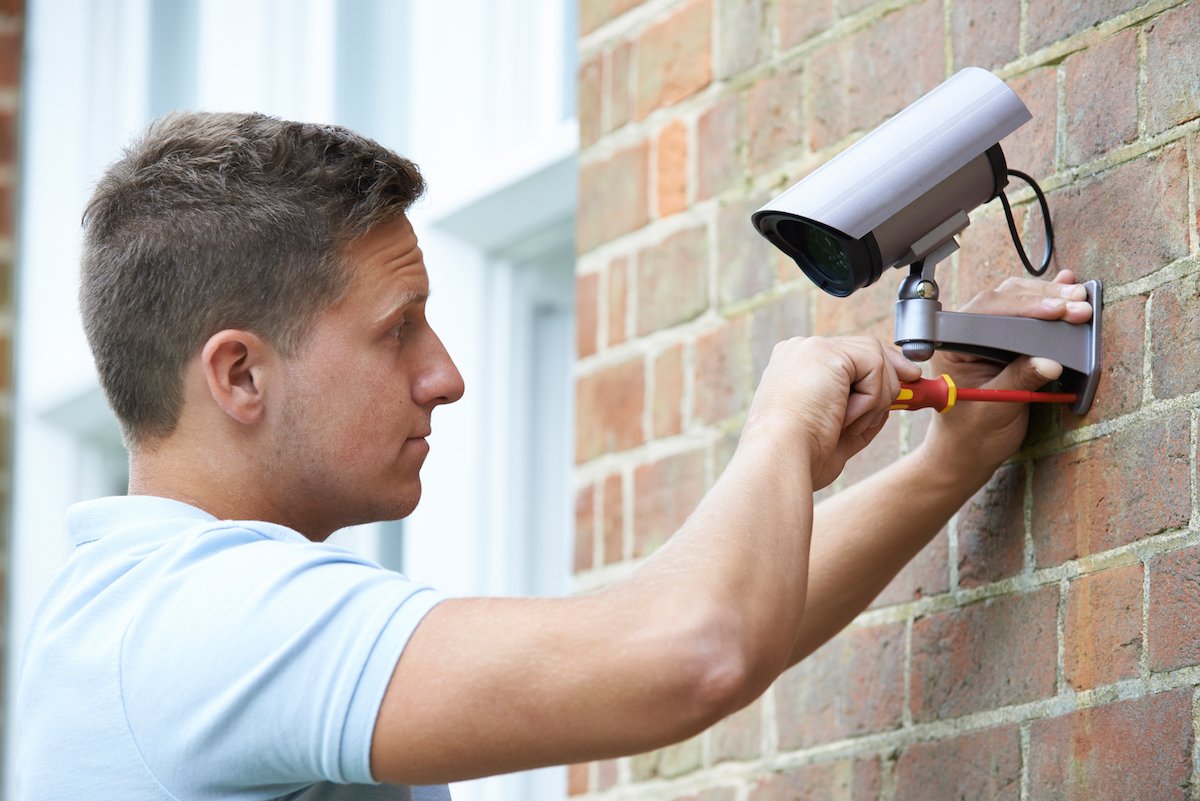
Security footage is typical evidence in burglary cases.
4. Degrees of Burglary
Second degree burglary is the middle tier of Colorado burglary crimes.
First Degree Burglary
The most serious type of burglary in Colorado is first degree burglary, which is:
- Knowingly entering someone else’s property with the intent to commit a crime and
- Committing an assault or having explosives or a deadly weapon.
First degree burglary is class 3 felony, carrying four to 12 years in prison and/or $3,000 to $750,000. However, 1st-degree burglary becomes a crime of violence (COV) if either:
- You used or possessed and threatened the use of a deadly weapon; or
- You caused serious bodily injury or death to any other person except another participant.
In general, 1st-degree burglary as a COV carries 10 to 32 years in prison. Five years are added if a dangerous weapon or semiautomatic assault weapon is involved.3
Third Degree Burglary
The least serious burglary crime in Colorado is third degree burglary. This occurs when, with intent to commit a crime, you enter or break into any:
- Vault,
- Safe,
- Cash register,
- Coin vending machine,
- Product dispenser,
- Money depository,
- Safety deposit box,
- Coin telephone,
- Coin box, or
- Other apparatus or equipment whether or not coin operated.
A class 2 misdemeanor, 3rd-degree burglary carries up to 120 days in jail and/or up to $750 in fines.4
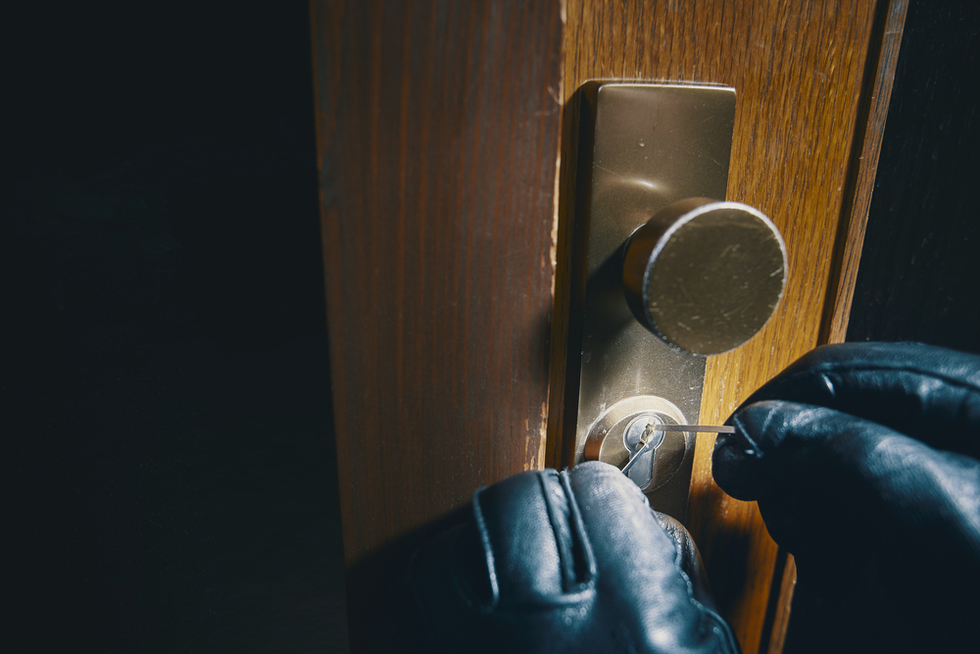
Second-degree burglary is the second most serious burglary charge in Colorado.
Frequently Asked Questions
Do I need to actually break into a building to be charged with second-degree burglary?
No, you do not need to break anything to be charged with second-degree burglary in Colorado. You can be convicted for simply entering through an unlocked door without permission, or even for staying in a building after you’re supposed to leave (like hiding in a store after closing time) with intent to commit a crime.
What’s the difference between burglary of a home versus a business?
Burglary of a dwelling (home, apartment, trailer) is more serious and carries four to 12 years in prison as a class 3 felony. Burglary of a commercial business is a class 4 felony with two to six years in prison. The law treats home invasions more severely than business break-ins.
Can I be convicted of burglary if I did not actually steal anything?
Yes, you can still be convicted of second-degree burglary even if you did not steal anything. The key element is having the intent to commit a crime when you entered or remained in the building unlawfully. The prosecution must prove you planned to commit a crime inside, regardless of whether you actually did it.
What happens if I was allowed to be in the building initially?
You can still be charged with second-degree burglary even if you originally had permission to be there. If you stay beyond when you are supposed to leave with intent to commit a crime, that counts as “remaining unlawfully.” For example, hiding in a store bathroom until after closing time to steal merchandise would qualify as burglary.
Additional Reading
For more in-depth information, refer to these scholarly articles:
- From the Thief in the Night to the Guest Who Stayed Too Long: The Evolution of Burglary in the Shadow of the Common Law – Indiana Law Review.
- Burglary – Crime & Justice article giving an overview of burglary laws.
- Reformation of Burglary – William & Mary Law Review article on how burglary laws have changed and can change.
- Reconceptualizing Burglary: An Analysis of the Use of Burglary as a Criminal Enhancement – Virginia Journal of Criminal Law.
- That’s Not a Burglary! Classic Crimes and Current Codes – Houston Law Review.
Legal References:
- CRS 18-4-203 – Second Degree Burglary.
(1) A person commits second degree burglary, if the person knowingly breaks an entrance into, enters unlawfully in, or remains unlawfully after a lawful or unlawful entry in a building or occupied structure with intent to commit therein a crime against another person or property.
(2)
(a) Second degree burglary is a class 4 felony if the burglary is of an occupied structure or of a building being used for the operation of a commercial business.
(b) Second degree burglary is a class 3 felony if:
(I) It is a burglary of a dwelling;
(II) The objective of the burglary is the theft of a controlled substance, as defined in section 18-18-102 (5), lawfully kept within any building or occupied structure; or
(III) The objective of the burglary is the theft of one or more firearms or ammunition.
(c) Second degree burglary is a class 2 misdemeanor if the person knowingly violated a written notice by a retailer or an order by a court of lawful jurisdiction specifically restraining a person from entering a particular retail location during hours which the retail store is open to the public.
(d) Second degree burglary is a class 5 felony if the burglary is of any other building not described in subsection (2)(a), (2)(b), or (2)(c) of this section.See also People v. Wright (Colo.App. 2021) 498 P.3d 1147. Whiteaker v. People (Colo. 2024) 547 P.3d 1122 (first-degree trespass is a lesser included offense of second-degree burglary). HB 23-1293. See CRS 18-1-501(6). Armintrout v. People (Colo. 1993) 864 P.2d 576. People v. Jiminez (1982) 651 P.2d 395. People v. Nichols (1996) 920 P.2d 901. - Same. Prior to March 1, 2022, second-degree burglary could never be a misdemeanor. SB21-271.
- CRS 18-4-202. CRS 18-1.3-406.
- CRS 18-4-204.