
Quick summary
To open a cannabis dispensary in California, medical or recreational, you need a state retailer license from the Department of Cannabis Control and permission from your city or county. The old nonprofit “collective” model for medical marijuana dispensaries no longer exists, so selling without a license can lead to civil penalties and criminal charges.
- Licenses: A storefront dispensary needs a Type 10 retailer license (delivery-only is Type 9), marked “M” for medical, “A” for adult-use, or both.
- Local approval: Cities and counties can ban dispensaries, and the state won’t issue a license that violates a local ordinance.
- Costs: The state charges a $1,000 application fee plus an annual license fee of $2,500 to $96,000 based on revenue (as of November 2026), on top of local fees.
- Penalties: Operating without a license can bring civil penalties of up to 3 times the license fee for each day, plus misdemeanor or felony sales charges.
In this article, our California marijuana defense attorneys explain how dispensary licensing works today:
- 1. Can you still open a medical marijuana dispensary?
- 2. What license does a dispensary need?
- 3. Do you need local approval?
- 4. How do you apply, and what does it cost?
- 5. Can a criminal record stop you from getting a license?
- 6. What rules apply once you open?
- 7. What are the penalties for an unlicensed dispensary?
- 8. What about federal law?
1. Can you still open a medical marijuana dispensary?
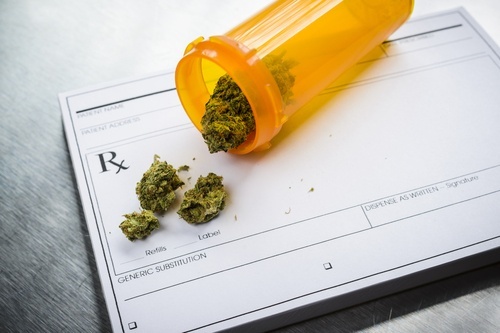
Yes, but not the way it was done before 2018. In California, medical marijuana dispensaries used to operate as nonprofit “collectives” or “cooperatives” of patients and caregivers. That legal exemption (former Health and Safety Code 11362.775) is no longer in California law.1
Today, every business that sells cannabis in California, whether to medical patients or to adults 21 and older, must have a state commercial cannabis license under the Medicinal and Adult-Use Cannabis Regulation and Safety Act (MAUCRSA). The licensing agency is the Department of Cannabis Control (DCC).2
The Compassionate Use Act (Proposition 215) still protects patients and their primary caregivers who possess or grow cannabis for the patient’s own medical use.3 But it does not let anyone run a store that sells cannabis to the public.
2. What license does a dispensary need?
California has separate license types for each step of the cannabis supply chain. For a dispensary, the main options are:4
- Type 10, Retailer: a storefront dispensary where customers come in to buy.
- Type 9, Non-storefront retailer: a delivery-only business with no store open to the public.
- Type 12, Microbusiness: a small business that combines retail with other activities, such as cultivation or manufacturing.
“M” and “A” licenses
Each license is marked “M” for medicinal sales, “A” for adult-use (recreational) sales, or both.5 An M-licensee may sell to adults 18 and older who have a valid physician’s recommendation or a county-issued medical marijuana identification card. An A-licensee may sell only to adults 21 and older.6
3. Do you need local approval?
Yes. In California, your city or county decides whether a dispensary can open there at all. Local governments may regulate cannabis businesses through zoning and business licensing, or ban them completely.7 The state may not approve a license if it would violate a local ordinance.8
Many California cities and counties don’t allow storefront dispensaries, or cap how many can open. Others allow delivery-only businesses but not storefronts. Check the local rules before you sign a lease or buy property.
The 600-foot school buffer
Under state law, a licensed cannabis business can’t be located within 600 feet of a K-12 school, a day care center or a youth center that exists when the license is issued, unless the state or the local government sets a different distance.9 Many cities set larger buffers.
4. How do you apply, and what does it cost?
Getting a California dispensary license usually involves these steps:
- Get local approval (a local permit, license or other authorization) from the city or county where the business will be.
- Apply to the DCC for a retailer, non-storefront retailer or microbusiness license, with information about the business, its owners and the premises.
- Register with the California Department of Tax and Fee Administration for a seller’s permit and a cannabis retailer excise tax permit.10
- Pay the annual license fee once the DCC approves the application.
State license fees
As of November 2026, the DCC charges retailers a $1,000 application fee, plus an annual license fee based on expected gross revenue. Examples:11
| Gross annual revenue | Annual license fee |
|---|---|
| $500,000 or less | $2,500 |
| $1,000,001 to $1,500,000 | $11,000 |
| $4,000,001 to $5,000,000 | $38,500 |
| More than $7,500,000 | $96,000 |
Local permit fees, local cannabis business taxes, rent, build-out, security and compliance costs come on top of these. They vary widely by city.

5. Can a criminal record stop you from getting a license?
Sometimes. The DCC may deny a license if an applicant or owner has a conviction that is substantially related to running a cannabis business. Those include violent or serious felonies, felonies involving fraud or embezzlement, selling or giving drugs to a minor, and drug trafficking with certain enhancements.12
But a past conviction for possessing, selling, transporting or growing a controlled substance, where the sentence has been completed, is not by itself grounds for denial (except the minor and trafficking-enhancement cases above).13 The DCC must also consider evidence of rehabilitation. In our experience, applicants with older drug convictions are often approved if they disclose them and show what they have done since.
6. What rules apply once you open?
A licensed California dispensary must follow many state and local rules. Among the most important:
- Age and ID checks. Adult-use sales only to people 21 and older with government ID; medical sales to people 18 and older with ID plus a physician’s recommendation or county medical card.14
- No alcohol or tobacco. A licensed premises can’t sell alcoholic beverages or tobacco products.15
- Track and trace. Every product must be tracked through the state’s track-and-trace system from cultivation to sale.16
- Taxes. Retailers collect a 15% cannabis excise tax from customers (the rate is set at 15% through June 30, 2029), plus sales tax. Sales of medicinal cannabis to patients who show a valid state medical marijuana identification card are exempt from sales tax, but not from the excise tax.17
- Deal only with licensees. All commercial cannabis activity must be conducted between state licensees, so a dispensary may buy only from licensed distributors and other licensees.18
- Security, hours, packaging and advertising rules under the DCC’s regulations and local ordinances.19
7. What are the penalties for an unlicensed dispensary?
Running a dispensary without a state license in California can lead to both civil penalties and criminal charges.
Civil penalties
- Operators: up to 3 times the license fee for each violation, and each day of operation is a separate violation.
- People who aid and abet: owners, officers or others with control who knowingly help an unlicensed operation face up to 3 times the license fee per violation, capped at $30,000 per violation.
- Landlords: a property owner or manager who knowingly rents space for unlicensed commercial cannabis activity faces up to $10,000 per violation, with each day a separate violation.20
Criminal charges
Selling cannabis without a license can be charged as unlawful sale or transportation for sale under Health and Safety Code 11360, and keeping inventory for sale as possession for sale under HS 11359. For most people 18 and older, each is a misdemeanor with up to 6 months in county jail and a $500 fine. They can be felonies for people with certain prior convictions, sales to minors, or (for HS 11360) importing or exporting more than 28.5 grams of cannabis or 4 grams of concentrated cannabis.21 Growing more than 6 plants can be charged under HS 11358, and possessing more than the legal amount under HS 11357. For the details, see our page on concentrated cannabis laws.
8. What about federal law?
Federal law still treats most cannabis as a Schedule I controlled substance, so selling it is a federal crime even when California allows it.22
That changed in part in April 2026. A federal rule moved marijuana covered by a state medical marijuana license, and FDA-approved marijuana drug products, to Schedule III. State medical licensees must register with the Drug Enforcement Administration (DEA) to keep operating under federal law. According to the Justice Department, those medical licensees are no longer subject to the federal tax rule (26 U.S.C. 280E) that bars businesses dealing in Schedule I or II drugs from deducting ordinary business expenses.23
Adult-use (recreational) sales were not covered. As of November 2026, adult-use cannabis remains in Schedule I, so A-licensed dispensaries remain illegal under federal law and subject to 280E. A broader federal rescheduling proposal was still pending. Because these rules are changing quickly, talk to a cannabis business lawyer and a tax professional before you open.
Call us for help. If you are opening a dispensary, or you are under investigation or charged for selling cannabis without a license, our California marijuana defense attorneys can help. Contact Shouse Law Group for a free consultation. We have offices throughout California, including Los Angeles, Orange County, San Diego, Riverside, San Bernardino, Sacramento, Oakland, San Jose and San Francisco. For more, see our guide to Proposition 64.
Legal references:
- Former California Health and Safety Code 11362.775 (collective and cooperative cultivation). The section no longer appears in the code on the California Legislative Information site (checked November 2026).
- California Business and Professions Code 26010 (Department of Cannabis Control, within the Business and Consumer Services Agency as of July 1, 2026).
- California Health and Safety Code 11362.5(d) HS.
- California Business and Professions Code 26050(a) (Type 10 retailer; Type 12 microbusiness); Department of Cannabis Control, Cannabis Retailer License Application (DCC-LIC-006) (Retailer – Non-Storefront (Type 9) and Retailer (Type 10)).
- California Business and Professions Code 26050(b).
- California Business and Professions Code 26140.
- California Business and Professions Code 26200(a)(1): the cannabis licensing law does not limit local authority “to adopt and enforce local ordinances to regulate businesses licensed under this division, including, but not limited to, local zoning and land use requirements, business license requirements… or to completely prohibit the establishment or operation” of licensed businesses.
- California Business and Professions Code 26055(d): “The department shall not approve an application for a state license under this division if approval of the state license will violate the provisions of any local ordinance or regulation adopted in accordance with Section 26200.”
- California Business and Professions Code 26054(b).
- California Department of Tax and Fee Administration, Tax Guide for Cannabis Businesses: Retailers (checked November 2026).
- Department of Cannabis Control, Retail license fees (checked November 2026); Cal. Code Regs., tit. 4, § 15014.
- California Business and Professions Code 26057(b)(4).
- California Business and Professions Code 26057(b)(5): such a prior conviction “is not considered substantially related, and shall not be the sole ground for denial of a license.”
- California Business and Professions Code 26140 (see note 6 above).
- California Business and Professions Code 26054(a).
- California Business and Professions Code 26067.
- California Revenue and Taxation Code 34011.2 (as amended by AB 564, effective September 22, 2025); California Department of Tax and Fee Administration, Tax Guide for Cannabis Businesses: Retailers (“Beginning October 1, 2025, through June 30, 2029, the cannabis excise tax rate is 15 percent”; medicinal cannabis sales to cardholders exempt from sales and use tax).
- California Business and Professions Code 26053(a): “All commercial cannabis activity shall be conducted between licensees, except as otherwise provided in this division.”
- Department of Cannabis Control, Medicinal and Adult-Use Cannabis Regulations (Cal. Code Regs., tit. 4, div. 19).
- California Business and Professions Code 26038(a)(1)–(3).
- California Health and Safety Code 11360(a) HS; California Health and Safety Code 11359 HS.
- 21 U.S.C. 812(c), Schedule I(c)(10); 21 U.S.C. 841.
- U.S. Department of Justice, final rule placing FDA-approved products containing marijuana and marijuana subject to a state medical marijuana license in schedule III (signed April 22, 2026) (DEA registration for state medical licensees; the rule states that these licensees are no longer subject to the 26 U.S.C. 280E limit on deductions).