
Colorado Revised Statute § 18-8-610 C.R.S. makes it a crime to tamper with physical evidence. This means to alter, destroy, conceal, or falsify physical evidence so as to prevent it from being available at an upcoming official proceeding, such as a trial or sentencing hearing.
Tampering with physical evidence can be a felony or a misdemeanor depending on the type of case the evidence was being used for.
There are several reasons why someone would want to tamper with physical evidence. A defendant facing criminal charges may want to destroy any evidence of their criminal activity. Or someone may seek to implicate another person for a crime they did not commit and to alter or plant false evidence to be used against them in court.
In this article, our Denver criminal defense lawyers will address the following key issues regarding Colorado laws for tampering with physical evidence:
- 1. Tampering Defined
- 2. Penalties
- 3. Record Seals
- 4. Related Offenses
- Frequently Asked Questions
- Additional Reading
1. Tampering Defined
For you to be convicted of tampering with evidence in Colorado, prosecutors must prove beyond a reasonable doubt the following two elements:
- You believe that an official proceeding is pending or about to be instituted, and
- You either:
- destroyed, hid, removed, or changed physical evidence with the intent to impair its verity or availability in an official proceeding; or
- made, presented, or offered false or altered evidence with the intent that it be used in an official proceeding.1
“Official Proceeding” Meaning
An official proceeding generally refers to court proceedings, including civil or criminal trials. It may also include an:
- arraignment,
- administrative hearing,
- grand jury proceeding,
- juvenile delinquency case,
- legislative hearing,
- arbitration, or
- other governmental agency hearing.
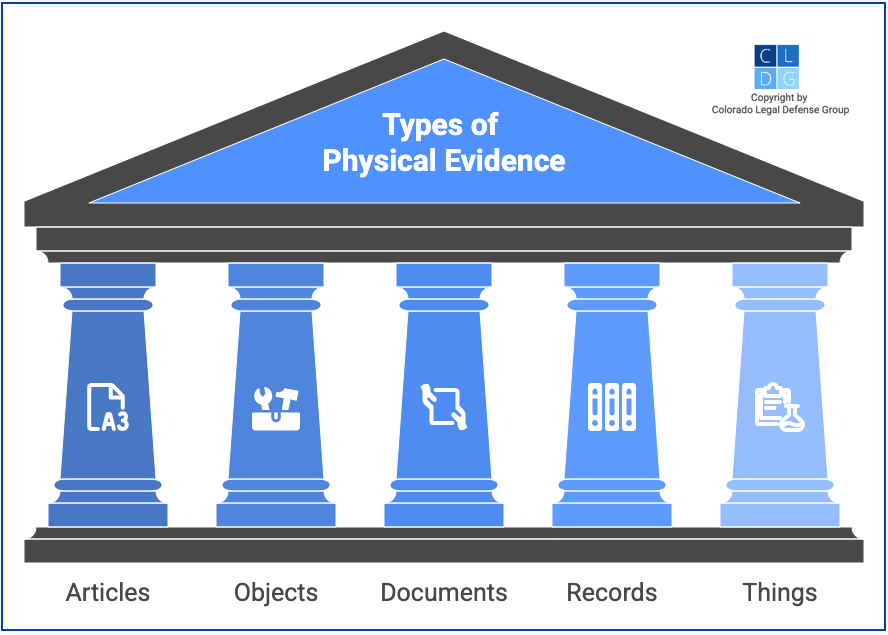
“Physical Evidence” Meaning
Physical evidence is any:
- article,
- object,
- document,
- record, or
- thing of physical substance.
Physical evidence may also consist of electronic records, videos, or audio recordings. This includes emails, text messages, social media messages, image files, video files, and computer files.
However, physical evidence does not include human body parts or human remains.2

Tampering with physical evidence can be a felony or a misdemeanor.
2. Penalties
Under C.R.S. 18-8-610, tampering with physical evidence of a felony crime is a class 6 felony. This carries:
- 12 to 18 months in prison (plus 1 year of parole) and/or
- a fine of $1,000 to $100,000.
Meanwhile, tampering with physical evidence of a misdemeanor crime in Colorado is a class 1 misdemeanor. This is punishable by:
- up to 364 days in jail and/or
- up to $1,000 in fines.3
3. Record Seals
Misdemeanor and felony convictions of tampering with physical evidence can be sealed from your Colorado criminal record three years after the case closes. Though if your charge gets dismissed, you can petition for a record seal right away.4
Having a clear background check greatly increases your chances of securing employment, a lease, or a loan. You are strongly advised to seek a Colorado record seal as soon as you are eligible.
4. Related Offenses
Witness Tampering
Tampering with a witness means attempting to induce a witness to withhold testimony, testify falsely, or be absent from an official proceeding. Tampering with a witness is a Class 4 felony, punishable by 2 to 6 years in prison and a fine of $2,000 to $500,000.5
Bribing a Juror
Bribing a juror involves offering or agreeing to offer money or any other benefit to a juror to influence the juror’s vote or opinion. Bribing a juror is a class 4 felony, with penalties including two to six years in prison and $2,000 to $500,000 in fines.6
Bribing a Witness
In Colorado, offering money or other benefits to a witness or victim of a crime to influence their decision is bribery. This is a Class 4 felony, punishable by two to six years in prison and by a fine of $2,000 to $500,000.7

Under C.R.S. 18-8-610, altering or destroying physical evidence that may be used in an official proceeding is “criminal tampering.”
Frequently Asked Questions
What exactly counts as “physical evidence” that could get me in trouble for tampering?
Physical evidence includes any article, object, document, record, or thing of physical substance. This covers electronic records like emails, text messages, social media posts, photos, videos, and computer files. However, it does not include human body parts or remains.
How do prosecutors prove I knew there was going to be a court case when I allegedly tampered with evidence?
Prosecutors must prove you believed an official proceeding was pending or about to start. This includes any court case, hearing, grand jury proceeding, or government agency hearing. They don’t need to prove a case was already filed, just that you believed one was coming.
What is the difference between a felony and misdemeanor charge for evidence tampering?
The penalty depends on the type of case the evidence relates to. If you tampered with evidence for a felony crime, you face a class 6 felony (12 to 18 months in prison). If it’s for a misdemeanor crime, you face a class 1 misdemeanor (up to 364 days in jail).
Can I get this conviction removed from my record later?
Yes, you can petition to seal your record three years after your case closes for both felony and misdemeanor convictions. If your charges are dismissed, you can petition for a record seal right away.
Additional Reading
For more in-depth information, our Las Vegas, NV/Clark County criminal defense lawyers suggest you refer to these scholarly articles:
- Evidence Tampering – Duke Law Journal about how destroying evidence affects litigation and the legal system.
- Tampering with Evidence – The Liability and Competitiveness Myth – American Bar Association Journal.
- Evidence Destroyed, Innocence Lost: The Preservation of Biological Evidence under Innocence Protection Statutes – American Criminal Law Review.
- Truth and Uncertainty: Legal Control of the Destruction of Evidence – Emory Law Journal.
- Spoliation of Evidence: Defining the Ethical Boundaries of Destroying Evidence – American Journal of Trial Advocacy.
Also see our general article on tampering laws in Colorado, government-related Colorado crimes, and police misconduct.
Legal References
- C.R.S. 18-8-610 – Tampering with physical evidence.
(1) A person commits tampering with physical evidence if, believing that an official proceeding is pending or about to be instituted and acting without legal right or authority, he:
(a) Destroys, mutilates, conceals, removes, or alters physical evidence with intent to impair its verity or availability in the pending or prospective official proceeding; or
(b) Knowingly makes, presents, or offers any false or altered physical evidence with intent that it be introduced in the pending or prospective official proceeding.
(2) “Physical evidence”, as used in this section, includes any article, object, document, record, or other thing of physical substance; except that “physical evidence“ does not include a human body, part of a human body, or human remains subject to a violation of section 18-8-610.5.
(3)
(a) Tampering with physical evidence of a felony crime is a class 6 felony.
(b) Tampering with physical evidence of a misdemeanor crime is a class 1 misdemeanor. - C.R.S. 18-8-610(2). See also People v. Pelaccio (Colo.App. 2024) No. 22CA1683;
- C.R.S. 18-8-610(3). Prior to March 1, 2022, tampering with physical evidence was always a class 6 felony. SB21-271.
- C.R.S. 24-72-701-711.
- C.R.S. 18-8-707. See also People v. Clark (Colo.App. 2024) No. 22CA0344.
- C.R.S. 18-8-606.
- C.R.S. 18-8-703.