

Walking with open containers of alcohol is usually unlawful throughout Colorado. However, local governments may license and regulate common consumption areas called “entertainment districts.”
Within an entertainment district, you may walk with open alcohol containers and not have to dump them when leaving a particular bar or tavern. Once you leave the boundaries of the entertainment district, you can no longer have an open alcoholic beverage container.1
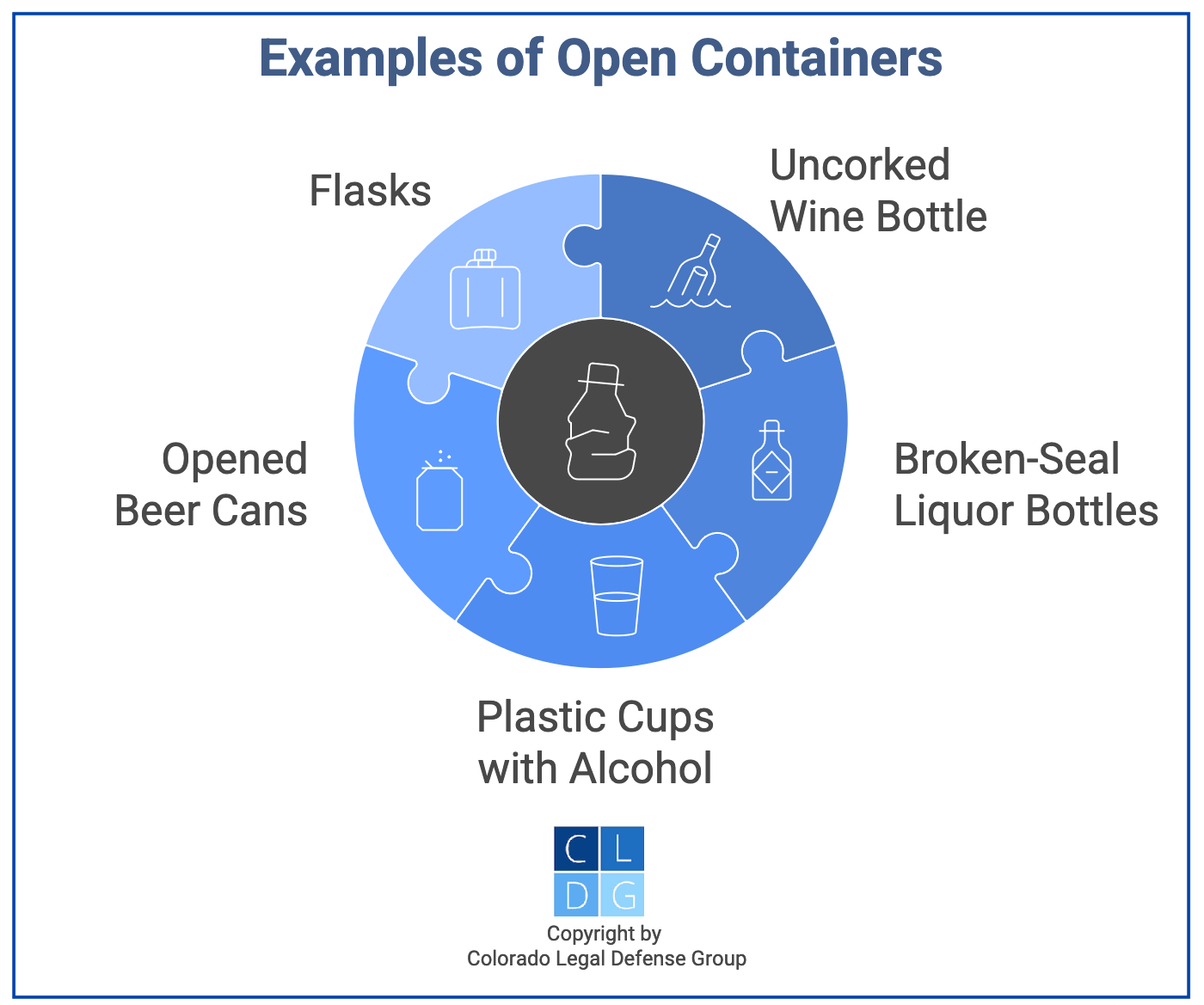
In Aurora, for example, there is a common consumption area in Stanley Marketplace. Patrons can engage in alcohol consumption together at an outdoor patio, even if they bought the drinks from different establishments. Each bar gives you disposable cups to hold your drinks when you leave the premises, with the name of the bar written on the cup.2
Denver also passed a common consumption ordinance whereby businesses may apply for a license to have an entertainment district. Denver has also designated outdoor drinking zones downtown along Glenarm Place by 16th Street from 10 a.m. to 10 p.m. In addition, you may currently consume 3.2% beer in city parks.3
Depending on where you are caught walking and drinking in Colorado, police can ticket you and charge you a small fine.
Walking with Marijuana
It is always unlawful to walk with an open marijuana container in Colorado. It does not matter that recreational marijuana possession of up to two ounces is legal.
The public consumption of up to two ounces of marijuana is a drug petty offense, carrying up to $100 in fines and up to 24 hours of community service. Possession of more than two ounces is a misdemeanor, as this chart shows:
|
Amount of Marijuana in Colorado |
Marijuana Drug Possession Penalties |
| More than 2 oz. | Level 2 drug misdemeanor: 3 to 12 months of jail time and/or $250 to $1,000 |
| More than 6 oz. | Level 1 drug misdemeanor: 6 to 18 months in county jail and/or $500 to $5,000 |
Driving with an Open Container
Colorado’s open container laws under C.R.S. 42-4-1305 prohibit anyone in the passenger area of a motor vehicle from having an alcohol or marijuana container with a broken seal. (The passenger area extends to the glove compartment as well.) It does not matter whether you are unimpaired or safely parked on a public road or public parking lot.
Open container violations are prosecuted as a class A traffic infraction. The penalties include a $50 fine and a $16 surcharge for alcohol and a $7.80 surcharge for marijuana. You may also face a DUI arrest if you seem under the influence.4
Some Colorado cities permit outdoor alcohol consumption in certain areas.
Frequently Asked Questions
What counts as an “open container” in Colorado?
In Colorado, an open container is any bottle, can, or receptacle containing any amount of alcohol that is open, has a broken seal, or has had its contents partially removed. This applies regardless of whether you are actively drinking or if the vehicle is parked.
Where can I lawfully keep an open bottle in my car?
To stay compliant, any open alcoholic beverage must be kept in an area not normally occupied by the driver or passengers. This typically means the trunk or behind the last upright seat in a vehicle without a trunk (like the far back of an SUV). Keeping it in the glove box or center console is still considered a violation.
Can passengers drink if I am the “designated driver”?
Generally, no. Colorado law prohibits both drivers and passengers from possessing or consuming alcohol in the passenger area of a vehicle on a public highway. There are very specific exceptions for passengers in professional transport vehicles, such as limousines or buses, provided there is a physical partition or specific licensing.
What are the penalties for an open container ticket?
A standard open container violation is usually a class A traffic infraction. While it is not a criminal felony and won’t land you in jail on its own, it carries a fine and will show up on your driving record. However, if the open container leads to a DUI investigation, the legal stakes become significantly higher and more complex.
Additional Reading
For more information about open container laws, refer to the following:
- Open Container Laws By State 2024 Guide – Forbes.
- Open Container and Consumption Statutes – National Conference of State Legislatures.
- Open Containers of Alcohol in Motor Vehicles – Alcohol Policy Information System (APIS).
- States With Open Container Laws Have Fewer Alcohol-involved Vehicle Crashes – National Highway Traffic Safety Administration (NHTSA).
- Las Vegas exploring possibility of open container law in Arts District – 3 News (KSNV-NBC).
Legal References
- C.R.S. 44-3-301; 2018 Colorado Liquor Law Changes, Colorado Department of Revenue; Liquor Common Consumption, and Common Consumption Areas: What are they and how do they work? Denver Business Licensing Center. SB 11-273.
- Meghan Lopez, Should common consumption be allowed for alcohol in Denver?, Denver 7 ABC (May 15, 2019).
- Conor McCormick-Cavanagh, Late to the Party: Denver’s Common Consumption Area Program Still Dry, Westword (February 24, 2022); John Wenzel, What you need to know so you can enjoy drinking beer and wine in a Denver park, Denver Post (June 12, 2019). Briana Fernandez, Denver rolls out outdoor drinking zones in downtown, 9News CBS (May 20, 2025). See also, Scott Miller, No More Walking and Drinking in Vail Village, Vail Daily ().
- C.R.S. 42-4-1305.