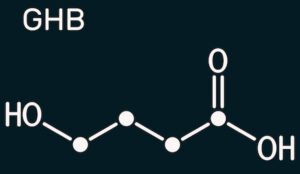
Gamma Hydroxybutyric Acid…more commonly referred to as "GHB", the "date rape" drug, "liquid ecstasy", "liquid X", "liquid E", "G" and "Georgia Home Boy"…is what’s known as an illegal controlled substance. A "controlled substance" is a narcotic whose use, possession and manufacture are all regulated by the government under the United States "Controlled Substances Act".
The Controlled Substances Act classifies GHB as both a Schedule I and a Schedule III drug.1
A "Schedule I" drug is a narcotic that
By contrast, a "Schedule III" drug is a narcotic that
Because of the dual classification of this drug, there are many laws that regulate its use, possession and sales. This article…written by our California drug crimes defense attorneys4…serves as an overview of these laws. Specifically, we address the following:
1.1. Medical uses
1.2. Use as a "club drug"
2.1. Health and Safety Code Sections 11350 and 11377 HS -- California’s "personal possession of GHB" laws
2.2. Health and Safety Code Sections 11351 and 11378 HS -- California’s "possession or purchase
of GHB for sale" laws2.3. Health and Safety Code Sections 11352 and 11379 HS -- California’s laws against" transporting
or selling GHB"2.4. Health and Safety Code 11550 HS -- California’s law against being under the influence of GHB
2.5. Driving under the influence of GHB
If, after reading this article, you would like more information, we invite you to contact us at Shouse Law Group.
You may also find helpful information in our related articles on California Drug Crimes; Health and Safety Code Sections 11377, 11378 and 11379 HS Possessing and Selling Controlled Substances; Health and Safety Code 11350 HS Possessing Controlled Substances; Health and Safety Code 11351 HS Possessing or Purchasing a Controlled Substance for Sale; Health and Safety Code 11352 HS Transporting or Selling a Controlled Substance; Health and Safety Code 11550 HS California’s Under the Influence Law; Vehicle Code 23152 VC California’s Driving Under the Influence of Drugs Law; Cocaine; Heroin; Phencyclidine ("PCP"); Ketamine; Ecstasy (Commonly Referred to as "X"); Marijuana; Codeine; Hydrocodone "Vicodin"; California Legal Defenses; California’s Search and Seizure Laws; The Legal Defense of Entrapment; Police Misconduct; Wobblers; Misdemeanors; Felonies; Proposition 36; Penal Code 1000 PC Drug Diversion; and California Drug Courts.
GHB is a central nervous system depressant. A "central nervous system depressant" is a drug that slows down brain activity. Because of this, GHB can be deadly when combined with alcohol or other depressants.
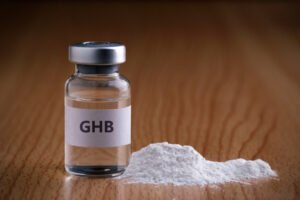
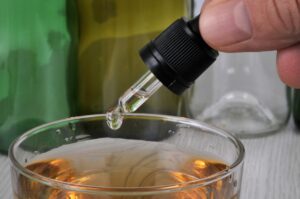
GHB comes in a clear liquid, white powder, tablets and capsules. It is virtually colorless and odorless and quickly dissolves in liquid.5 Because of the fact that GHB can be easily "slipped" into someone’s drink without detection…as well as its ability to sedate and incapacitate an unsuspecting victim…it is a commonly used "date rape" drug.
GHB was first manufactured in 1960 as an anesthetic because of its ability to induce sleep and create a reversible coma. However, the onset of coma was often associated with seizure-like symptoms. Then, in the late 1980s, GHB was marketed and sold as
However, by 1991, the Food and Drug Administration ("FDA") banned GHB based on several reports of adverse reactions, which included a number of lethal overdoses. On February 18, 2000, President Clinton signed a bill that declared GHB a Schedule I drug.7
But then, in 2001, GHB was also added as a Schedule III drug.8 This was as a result of a new drug called XYREM. XYREM…the primary active ingredient of which is GHB…is currently approved for the treatment of narcolepsy in patients who suffer from
Legal GHB is only available when prescribed in XYREM, and its use is strictly regulated.
Most of GHB’s notoriety stems from its use as a club drug. A "club drug" is a category of recreational drugs that are used to enhance the experience of being in a club/party/bar/concert with loud music and flashing lights. Users take advantage of the drug’s stimulating and psychedelic properties.
In addition to GHB, some popular club drugs include (but are not limited to):
The effects of GHB are typically felt within anywhere from ten minutes to one hour and usually last between 2-3 hours. Some of these effects include:
Because the legal uses for GHB are so restricted, California strictly regulates the narcotic’s use, possession and sales. As a result, engaging in any of these activities subjects you to prosecution.
The following is a brief synopsis of some of the most common California drug crimes that apply to GHB.
You violate Health and Safety Code 11350 HS California’s "personal possession of a controlled substance" law and Health & Safety Code 11377 HS California’s law against personally possessing a controlled substance when you possess GHB without a valid prescription.11 You hold a valid prescription when you
If you do not have a valid prescription…and are caught possessing GHB…you face what is known as a wobbler. A "wobbler" is a crime that the prosecution may choose to file as either a misdemeanor or a felony, depending on
Typically, a drug only falls under one of the above laws. HS 11377 is considered less severe, as it involves drugs that are considered less serious than those under HS 11350. However, because of GHB’s unique nature in being classified under two different Schedules, it is included in both laws. The prosecutor will ultimately choose which code to charge you with depending on the circumstances of the offense.
If convicted of California’s law against possessing GHB under either law as a misdemeanor, you face up to one year in a county jail. If convicted of possessing GHB in California under either law as a felony, you face 16 months, or two, or three years in the California state prison.12
The difference in punishment between these offenses lies in the fines. HS 11350 is considered a more serious offense and subjects you to a maximum fine of $20,000. However, HS 11377 only subjects you to a maximum $10,000 fine.13
And both of these offenses apply to other narcotics as well. Some other controlled substances addressed under HS 11350 include
And some of the other narcotics covered by Health and Safety Code 11377 include
The good news is that a California conviction for personal possession of GHB…rather than a conviction for possession of GHB for sale (discussed below)…may entitle you to participate in drug diversion.
California’s "drug diversion"…a program that allows eligible defendants to serve their time in drug treatment in lieu of jail or prison…is available through
If you successfully complete drug diversion, your GHB charge(s) will be dismissed at the end of the program.
Both Health and Safety Code 11351 HS California’s "possession or purchase of a controlled substance for sale" law and Health and Safety Code 11378 HS prohibit possessing or purchasing GHB with the intent to sell it.16
These offenses are considered more serious than those listed above. This is because these offenses not only involve possessing GHB but also involve possessing or purchasing the narcotic with the intent to sell it to other people/organizations.
If you possess or purchase GHB…and the prosecutor can prove that you did so with the intent to resell the drug and not to consume it personally…you face a felony.
Health and Safety Code 11351 HS subjects you to two, three or four years in the state prison and a maximum $20,000 fine.17 HS 11378 subjects you to 16 months, or two or three years in prison and a $10,000 fine.18 And again, it is the prosecutor who chooses which charge to file.
A California conviction for possessing or purchasing GHB with the intent to sell it does not qualify for drug diversion.
But as Rancho Cucamonga criminal defense attorney John Murray19 explains, "This is one of the reasons why having a savvy California drug crimes lawyer is so critical. If your attorney can convince the prosecutor/judge/jury that you only possessed the GHB for personal use rather than for sale, you not only face lesser penalties but have the chance to participate in drug diversion as well."
You violate Health and Safety Code 11352 HS California’s "transporting or selling a controlled substance" law and/or Health and Safety Code 11379 HS when you sell or transport GHB. The difference between this law and California’s law against possessing GHB with the intent to sell it is that this law deals with actual California GHB sales…not just intent. Transporting, giving away and administrating GHB are a few of the other offenses prohibited under these laws.20
If you are convicted under HS 11352 for selling or transporting GHB…or any of the other activities banned under this law…you face a felony punishable by up to three, four or five years in prison and a $20,000 fine.21 A felony conviction under HS 11377 subjects you to two, three, or four years in prison and a $10,000 fine.22
However, if you are convicted of transporting GHB across more than two counties under either law, your prison sentence increases to three, six, or nine years.23
And the judge will most likely impose the harshest available term if you knew…or reasonably should have known…that the recipient of the GHB
∗Finally, a conviction for any of these California GHB-related offenses subjects you to deportation if you are a legal immigrant or legal alien.25 For more information about how California drug offenses affect aliens, please review our article on California Crimes that Lead to Deportation.
You violate Health and Safety Code 11550 HS California’s "being under the influence of a controlled substance" law when you are under the influence of GHB.26 You are "under the influence" of GHB if "your physical and/or mental abilities are impaired in "any detectable manner".27
A conviction for this misdemeanor offense subjects you to 90 days to one-year in a county jail. As with a personal possession charge, being under the influence of GHB may allow you to participate in a drug diversion program in lieu of incarceration.28
You violate Vehicle Code 23152a VC California’s driving under the influence of drugs law by driving under the influence of GHB.29 Driving under the influence is different than simply being under the influence. You drive under the influence of GHB when the GHB has "so far affected the nervous system, the brain, or muscles as to impair to an appreciable degree the ability to operate a vehicle in a manner like that of an ordinarily prudent and cautious person in full possession of his faculties."30
Most convictions for driving under the influence of GHB are misdemeanors, subjecting you to fines and potential jail time. Drug diversion is not applicable to a California conviction for driving under the influence.
If you possess or use GHB because you suffer from narcolepsy…and are using the drug in compliance with a valid prescription…that is probably your best legal defense to a California GHB-related crime.
If, however, that is not the case, do not despair. There are a variety of defenses to California GHB-related charges that your California drug crimes defense lawyer can present on your behalf. Determining which ones will be most effective will, of course, depend on the exact charges you face. However, there are several that are common to many California drug offenses.
These include (but are not limited to):
a) they "planted" or "fabricated" evidence,
b) used excessive force to obtain or discover the alleged GHB, or
c) they lied about the circumstances that led to your stop and arrest.
For questions about California’s GHB-related drug offenses, or to discuss your case confidentially with one of our California criminal defense attorneys, do not hesitate to contact us at Shouse Law Group.
We have local criminal law offices in and around Los Angeles, San Diego, Orange County, Riverside, San Bernardino, Ventura, San Jose, Oakland, the San Francisco Bay area, and several nearby cities.
Additionally, our Las Vegas Nevada criminal defense attorneys are available to answer any questions about Nevada’s laws as to possession and sale of GHB. For more information, we invite you to contact our local attorneys at one of our Nevada law offices, located in Reno and Las Vegas.31
1California Health and Safety Code 11054 HS -- Schedule I; substances included. ("(a) The controlled substances listed in this section are included in Schedule I…(e) Depressants. Unless specifically excepted or unless listed in another schedule, any material, compound, mixture, or preparation which contains any quantity of the following substances having a depressant effect on the central nervous system, including its salts, isomers, and salts of isomers whenever the existence of those salts, isomers, and salts of isomers is possible within the specific chemical designation: (1) Mecloqualone. (2) Methaqualone. (3) Gamma hydroxybutyric acid (also known by other names such as GHB; gamma hydroxy butyrate; 4-hydroxybutyrate; 4-hydroxybutanoic acid; sodium oxybate; sodium oxybutyrate), including its immediate precursors, isomers, esters, ethers, salts, and salts of isomers, esters, and ethers, including, but not limited to, gammabutyrolactone, for which an application has not been approved under Section 505 of the Federal Food, Drug, and Cosmetic Act (21 U.S.C. Sec. 355)…")
See also California Health and Safety Code 11056 HS -- Schedule III; substances included. ("(a) The controlled substances listed in this section are included in Schedule III…(c) Depressants. Unless specifically excepted or unless listed in another schedule, any material, compound, mixture, or preparation which contains any quantity of the following substances having a depressant effect on the central nervous system:…(11) Gamma hydroxybutyric acid, and its salts, isomers and salts of isomers, contained in a drug product for which an application has been approved under Section 505 of the Federal Food, Drug, and Cosmetic Act (21 U.S.C. Sec. 355)…")
221 U.S.C. Section 812 -- The United States Controlled Substances Act. ("(a) Establishment. There are established five schedules of controlled substances, to be known as schedules I, II, III, IV, and V. Such schedules shall initially consist of the substances listed in this section. The schedules established by this section shall be updated and republished on a semiannual basis during the two-year period beginning one year after October 27, 1970, and shall be updated and republished on an annual basis thereafter. (b) Placement on schedules; findings required Except where control is required by United States obligations under an international treaty, convention, or protocol, in effect on October 27, 1970, and except in the case of an immediate precursor, a drug or other substance may not be placed in any schedule unless the findings required for such schedule are made with respect to such drug or other substance. The findings required for each of the schedules are as follows:(1) Schedule I [this is where California GHB-related offenses fall]. – (A) The drug or other substance has a high potential for abuse.(B) The drug or other substance has no currently accepted medical use in treatment in the United States. (C) There is a lack of accepted safety for use of the drug or other substance under medical supervision. (2) Schedule II. – (A) The drug or other substance has a high potential for abuse.(B) The drug or other substance has a currently accepted medical use in treatment in the United States or a currently accepted medical use with severe restrictions.(C) Abuse of the drug or other substances may lead to severe psychological or physical dependence.(3) Schedule III [where other California related GHB-related offenses fall]. – (A) The drug or other substance has a potential for abuse less than the drugs or other substances in schedules I and II. (B) The drug or other substance has a currently accepted medical use in treatment in the United States.(C) Abuse of the drug or other substance may lead to moderate or low physical dependence or high psychological dependence. (4) Schedule IV. – (A) The drug or other substance has a low potential for abuse relative to the drugs or other substances in schedule III.(B) The drug or other substance has a currently accepted medical use in treatment in the United States. (C) Abuse of the drug or other substance may lead to limited physical dependence or psychological dependence relative to the drugs or other substances in schedule III.(5) Schedule V. - (A) The drug or other substance has a low potential for abuse relative to the drugs or other substances in schedule IV.(B) The drug or other substance has a currently accepted medical use in treatment in the United States.(C) Abuse of the drug or other substance may lead to limited physical dependence or psychological dependence relative to the drugs or other substances in schedule IV.(c) Initial schedules of controlled substances Schedules I, II, III, IV, and V shall, unless and until amended pursuant to section 811 of this title, consist of the following drugs or other substances, by whatever official name, common or usual name, chemical name, or brand name designated…").
3See same.
4Our California drug crimes defense attorneys have local Los Angeles law offices in Beverly Hills, Burbank, Glendale, Lancaster, Long Beach, Los Angeles, Pasadena, Pomona, Torrance, Van Nuys, West Covina, and Whittier. We have additional law offices conveniently located throughout the state in Orange County, San Diego, Riverside, San Bernardino, Ventura, San Jose, Oakland, the San Francisco Bay area, and several nearby cities.
6Emedicine- Toxicity, Gamma-Hydroxybutyrate.
See also American Family Physician -- Gamma-Hydroxybutyrate (GHB): A Newer Drug of Abuse.
7See same. ("On February 18, 2000, President Clinton signed the bill H.R. 2130 (the Hillory J. Farias and Samantha Reid Date-Rape Drug Prohibition Act of 2000), which made GHB a schedule-I drug. In the late 1980s, GHB was marketed and sold in the health food industry as a "growth hormone stimulator" to help bodybuilders promote muscle mass and maintain weight, and as an over-the-counter sedative agent. In 1991, the drug was banned by the FDA after several reports of adverse reactions in individuals using nutritional and weight loss supplements containing GHB.9 Despite the FDA ban, GHB continues to be manufactured and sold clandestinely.")
8See California Health and Safety Code 11056 HS, endnote 1, above. Historical and statutory notes. ("Stats.2001, c. 841 (A.B.258), inserted subd. (c)(11), relating to gamma hydroxybutyric acid.")
10DanceSafe.org – Drug information: GHB. ("At lower doses GHB has a euphoric effect similar to alcohol, and can make the user feel relaxed, happy and sociable. Higher doses can make the user feel dizzy and sleepy, and can sometimes cause vomiting, muscle spasms, and loss of consciousness. Overdoses will always cause loss of consciousness (temporary coma), and will slow down breathing. Sometimes, and particularly if mixed with alcohol, GHB can slow breathing down to a dangerously low rate, which has caused a number of deaths. The effects are usually felt between ten minutes and one hour after ingestion. The primary effects last about 2-3 hours, but residual effects can last up to a whole day.")
11California Health and Safety Code 11350 HS -- Possession of controlled substances. ("(a) Except as otherwise provided in this division, every person who possesses (1) any controlled substance specified in subdivision (b) or (c), or paragraph (1) of subdivision (f) of Section 11054, specified in paragraph (14), (15), or (20) of subdivision (d) of Section 11054, or specified in subdivision (b) or (c) of Section 11055, or specified in subdivision (h) of Section 11056, or (2) any controlled substance classified in Schedule III, IV, or V which is a narcotic drug, unless upon the written prescription of a physician, dentist, podiatrist, or veterinarian licensed to practice in this state, shall be punished by imprisonment in the state prison. (b) Except as otherwise provided in this division, every person who possesses any controlled substance specified in subdivision (e) of Section 11054 [California drug laws involving GHB fall here]shall be punished by imprisonment in the county jail for not more than one year or in the state prison. (c) Except as otherwise provided in this division, whenever a person who possesses any of the controlled substances specified in subdivision (a) or (b), the judge may, in addition to any punishment provided for pursuant to subdivision (a) or (b), assess against that person a fine not to exceed seventy dollars ($70) with proceeds of this fine to be used in accordance with Section 1463.23 of the Penal Code. The court shall, however, take into consideration the defendant's ability to pay, and no defendant shall be denied probation because of his or her inability to pay the fine permitted under this subdivision. (d) Except in unusual cases in which it would not serve the interest of justice to do so, whenever a court grants probation pursuant to a felony conviction under this section, in addition to any other conditions of probation which may be imposed, the following conditions of probation shall be ordered: (1) For a first offense under this section, a fine of at least one thousand dollars ($1,000) or community service. (2) For a second or subsequent offense under this section, a fine of at least two thousand dollars ($2,000) or community service. (3) If a defendant does not have the ability to pay the minimum fines specified in paragraphs (1) and (2), community service shall be ordered in lieu of the fine.")
See also California Health and Safety Code 11377 HS – Possession of a controlled substance. ("(a) Except as authorized by law and as otherwise provided in subdivision (b) or Section 11375, or in Article 7 (commencing with Section 4211) of Chapter 9 of Division 2 of the Business and Professions Code, every person who possesses any controlled substance which is (1) classified in Schedule III, IV, or V, and which is not a narcotic drug, (2) specified in subdivision (d) of Section 11054, except paragraphs (13), (14), (15), and (20) of subdivision (d), (3) specified in paragraph (11) of subdivision (c) of Section 11056 [California’s drug laws involving GHB fall under this section], (4) specified in paragraph (2) or (3) of subdivision (f) of Section 11054, or (5) specified in subdivision (d), (e), or (f) of Section 11055, unless upon the prescription of a physician, dentist, podiatrist, or veterinarian, licensed to practice in this state, shall be punished by imprisonment in a county jail for a period of not more than one year or in the state prison. (b)(1) Any person who violates subdivision (a) by unlawfully possessing a controlled substance specified in subdivision (f) of Section 11056, and who has not previously been convicted of a violation involving a controlled substance specified in subdivision (f) of Section 11056, is guilty of a misdemeanor. (2) Any person who violates subdivision (a) by unlawfully possessing a controlled substance specified in subdivision (g) of Section 11056 is guilty of a misdemeanor. (3) Any person who violates subdivision (a) by unlawfully possessing a controlled substance specified in paragraph (7) or (8) of subdivision (d) of Section 11055 is guilty of a misdemeanor. (4) Any person who violates subdivision (a) by unlawfully possessing a controlled substance specified in paragraph (8) of subdivision (f) of Section 11057 is guilty of a misdemeanor. (c) In addition to any fine assessed under subdivision (b), the judge may assess a fine not to exceed seventy dollars ($70) against any person who violates subdivision (a), with the proceeds of this fine to be used in accordance with Section 1463.23 of the Penal Code. The court shall, however, take into consideration the defendant's ability to pay, and no defendant shall be denied probation because of his or her inability to pay the fine permitted under this subdivision.")
12See Health and Safety Code Sections 11350 and 11377 HS California’s laws against personal possession of GHB, endnote 11, above.
See also California Penal Code 18 PC -- Punishment for felony not otherwise prescribed; alternate sentence to county jail. ("Except in cases where a different punishment is prescribed by any law of this state, every offense declared to be a felony, or to be punishable by imprisonment in a state prison, is punishable by imprisonment in any of the state prisons for 16 months, or two or three years; provided, however, every offense which is prescribed by any law of the state to be a felony punishable by imprisonment in any of the state prisons or by a fine, but without an alternate sentence to the county jail, may be punishable by imprisonment in the county jail not exceeding one year or by a fine, or by both.")
13California Health and Safety Code 11372 HS -- Fines. ("(a) In addition to the term of imprisonment provided by law for persons convicted of violating Section 11350 [California drug laws involving GHB fall here], 11351, 11351.5, 11352, 11353, 11355, 11359, 11360, or 11361, the trial court may impose a fine not exceeding twenty thousand dollars ($20,000) for each offense. In no event shall a fine be levied in lieu of or in substitution for the term of imprisonment provided by law for any of these offenses. (b) Any person receiving an additional term pursuant to paragraph (1) of subdivision (a) of Section 11370.4, may, in addition, be fined by an amount not exceeding one million dollars ($1,000,000) for each offense. (c) Any person receiving an additional term pursuant to paragraph (2) of subdivision (a) of Section 11370.4, may, in addition, be fined by an amount not to exceed four million dollars ($4,000,000) for each offense. (d) Any person receiving an additional term pursuant to paragraph (3) of subdivision (a) of Section 11370.4, may, in addition, be fined by an amount not to exceed eight million dollars ($8,000,000) for each offense. (e) The court shall make a finding, prior to the imposition of the fines authorized by subdivisions (b) to (e), inclusive, that there is a reasonable expectation that the fine, or a substantial portion thereof, could be collected within a reasonable period of time, taking into consideration the defendant's income, earning capacity, and financial resources.")
See also California Penal Code 672 PC -- Offenses for which no fine prescribed; fine authorized in addition to imprisonment. ("Upon a conviction for any crime punishable by imprisonment in any jail or prison, in relation to which no fine is herein prescribed, the court may impose a fine on the offender not exceeding one thousand dollars ($1,000) in cases of misdemeanors or ten thousand dollars ($10,000) in cases of felonies, in addition to the imprisonment prescribed.")
14See Health and Safety Code 11350 HS California’s law against personal possession of GHB, endnote 11, above.
15See Health and Safety Code 11377 HS California’s law against possession of GHB, endnote 11, above.
16California Health and Safety Code 11351 HS -- Possession or purchase for sale of designated controlled substances; punishment. ("Except as otherwise provided in this division, every person who possesses for sale or purchases for purposes of sale (1) any controlled substance specified in subdivision (b), (c), or (e) of Section 11054 [where California’s drug laws involving GHB are located], specified in paragraph (14), (15), or (20) of subdivision (d) of Section 11054, or specified in subdivision (b) or (c) of Section 11055, or specified in subdivision (h) of Section 11056, or (2) any controlled substance classified in Schedule III, IV, or V which is a narcotic drug, shall be punished by imprisonment in the state prison for two, three, or four years.")
See also California Health and Safety Code 11378 HS – Possession of a controlled substance for sale; punishment. ("Except as otherwise provided in Article 7 (commencing with Section 4211) of Chapter 9 of Division 2 of the Business and Professions Code, every person who possesses for sale any controlled substance which is (1) classified in Schedule III, IV, or V and which is not a narcotic drug, except subdivision (g) of Section 11056, (2) specified in subdivision (d) of Section 11054, except paragraphs (13), (14), (15), (20), (21), (22), and (23) of subdivision (d), (3) specified in paragraph (11) of subdivision (c) of Section 11056 [where California’s drug laws involving GHB are located], (4) specified in paragraph (2) or (3) of subdivision (f) of Section 11054, or (5) specified in subdivision (d), (e), or (f), except paragraph (3) of subdivision (e) and subparagraphs (A) and (B) of paragraph (2) of subdivision (f), of Section 11055, shall be punished by imprisonment in the state prison.")
17See California Health and Safety Code 11351 HS -- Possession or purchase for sale of designated controlled substances; punishment, endnote 18, above.
See also California Health and Safety Code 11372 HS – Fines, endnote 11, above.
18See California Health and Safety Code 11378 HS – Possession of a controlled substance for sale; punishment, endnote 18, above.
See also California Penal Code 672 PC -- Offenses for which no fine prescribed, endnote 13, above.
19Rancho Cucamonga criminal defense attorney John Murray defends clients accused of California GHB-related offenses throughout the Inland Empire including San Bernardino, Riverside, Rancho Cucamonga, Hemet, Banning, Fontana, Joshua Tree, Barstow, Palm Springs and Victorville.
20California Health and Safety Code 11352 HS -- Transportation, sale, giving away, etc., of designated controlled substances; punishment. ("(a) Except as otherwise provided in this division, every person who transports, imports into this state, sells, furnishes, administers, or gives away, or offers to transport, import into this state, sell, furnish, administer, or give away, or attempts to import into this state or transport (1) any controlled substance specified in subdivision (b), (c), or (e), or paragraph (1) of subdivision (f) of Section 11054 [California drug offenses involving GHB fall here], specified in paragraph (14), (15), or (20) of subdivision (d) of Section 11054, or specified in subdivision (b) or (c) of Section 11055, or specified in subdivision (h) of Section 11056, or (2) any controlled substance classified in Schedule III, IV, or V which is a narcotic drug, unless upon the written prescription of a physician, dentist, podiatrist, or veterinarian licensed to practice in this state, shall be punished by imprisonment in the state prison for three, four, or five years. (b) Notwithstanding the penalty provisions of subdivision (a), any person who transports for sale any controlled substances specified in subdivision (a) within this state from one county to another noncontiguous county shall be punished by imprisonment in the state prison for three, six, or nine years.")
See also California Health and Safety Code 11379 HS -- Transportation, sale, furnishing, etc. of a controlled substance; punishment. ("(a) Except as otherwise provided in subdivision (b) and in Article 7 (commencing with Section 4211) of Chapter 9 of Division 2 of the Business and Professions Code, every person who transports, imports into this state, sells, furnishes, administers, or gives away, or offers to transport, import into this state, sell, furnish, administer, or give away, or attempts to import into this state or transport any controlled substance which is (1) classified in Schedule III, IV, or V and which is not a narcotic drug, except subdivision (g) of Section 11056, (2) specified in subdivision (d) of Section 11054 except paragraphs (13), (14), (15), (20), (21), (22), and (23) of subdivision (d), (3) specified in paragraph (11) of subdivision (c) of Section 11056 [this is where California GHB-related drug offenses fall], (4) specified in paragraph (2) or (3) of subdivision (f) of Section 11054, or (5) specified in subdivision (d) or (e), except paragraph (3) of subdivision (e), or specified in subparagraph (A) of paragraph (1) of subdivision (f), of Section 11055, unless upon the prescription of a physician, dentist, podiatrist, or veterinarian, licensed to practice in this state, shall be punished by imprisonment in the state prison for a period of two, three, or four years. (b) Notwithstanding the penalty provisions of subdivision (a), any person who transports for sale any controlled substances specified in subdivision (a) within this state from one county to another noncontiguous county shall be punished by imprisonment in the state prison for three, six, or nine years.")
21See California Health and Safety Code 11352 HS -- Transportation, sale, giving away, etc., of designated controlled substances; punishment, endnote 22, above.
See also California Health and Safety Code 11372 HS – Fines, endnote 11, above.
22See California Health and Safety Code 11379 HS -- Transportation, sale, furnishing, etc. of a controlled substance; punishment, endnote 22, above.
See also California Penal Code 672 PC -- Offenses for which no fine prescribed, endnote 13, above.
23See California Health and Safety Code Sections 11352 and 11379 HS -- Transportation, sale, giving away, etc., of designated controlled substances; punishment, endnote 22, above.
24California Penal Code 1170.82 PC -- Controlled substances; sale or transfer; aggravation of crime. ("Upon a conviction of a violation of Section 11352 [California’s drug related offenses involving GHB fall here], 11360, 11379, or 11379.5 of the Health and Safety Code, the fact that the person who committed the offense knew, or reasonably should have known, that any of the following circumstances existed with regard to the person to whom he or she unlawfully sold, furnished, administered, or gave away a controlled substance, shall be a circumstance in aggravation of the crime in imposing a term pursuant to subdivision (b) of Section 1170: (a) The person was pregnant at the time of the selling, furnishing, administering, or giving away of the controlled substance. (b) The person had been previously convicted of a violent felony, as defined in subdivision (c) of Section 667.5. (c) The person was in psychological treatment for a mental disorder or for substance abuse at the time of the selling, furnishing, administering, or giving away of the controlled substance.")
258 U.S. Code Section 1227 -- Deportable aliens. ("(a) Classes of deportable aliens. Any alien (including an alien crewman) in and admitted to the United States shall, upon the order of the Attorney General, be removed if the alien is within one or more of the following classes of deportable aliens…(2) Criminal offenses…(B) Controlled substances. (i) Conviction. Any alien who at any time after admission has been convicted of a violation of (or a conspiracy or attempt to violate) any law or regulation of a State, the United States, or a foreign country relating to a controlled substance (as defined in section 802 of Title 21), other than a single offense involving possession for one's own use of 30 grams or less of marijuana, is deportable. And because PCP is a controlled substance, it is a California crime that could lead to deportation.
26California Health and Safety Code 11550 HS -- Under the influence. (" (a) No person shall use, or be under the influence of any controlled substance which is (1) specified in subdivision (b), (c), or (e), or paragraph (1) of subdivision (f) of Section 11054 [California drug laws involving GHB fall here], specified in paragraph (14), (15), (21), (22), or (23) of subdivision (d) of Section 11054, specified in subdivision (b) or (c) of Section 11055, or specified in paragraph (1) or (2) of subdivision (d) or in paragraph (3) of subdivision (e) of Section 11055, or (2) a narcotic drug classified in Schedule III, IV, or V, except when administered by or under the direction of a person licensed by the state to dispense, prescribe, or administer controlled substances. It shall be the burden of the defense to show that it comes within the exception. Any person convicted of violating this subdivision is guilty of a misdemeanor and shall be sentenced to serve a term of not less than 90 days or more than one year in a county jail. The court may place a person convicted under this subdivision on probation for a period not to exceed five years and, except as provided in subdivision (c), shall in all cases in which probation is granted require, as a condition thereof, that the person be confined in a county jail for at least 90 days. Other than as provided by subdivision (c), in no event shall the court have the power to absolve a person who violates this subdivision from the obligation of spending at least 90 days in confinement in a county jail. (b) Any person who (1) is convicted of violating subdivision (a) when the offense occurred within seven years of that person being convicted of two or more separate violations of that subdivision, and (2) refuses to complete a licensed drug rehabilitation program offered by the court pursuant to subdivision (c), shall be punished by imprisonment in a county jail for not less than 180 days nor more than one year. In no event does the court have the power to absolve a person convicted of a violation of subdivision (a) that is punishable under this subdivision from the obligation of spending at least 180 days in confinement in a county jail unless there are no licensed drug rehabilitation programs reasonably available. For the purpose of this section, a drug rehabilitation program shall not be considered reasonably available unless the person is required to pay no more than the court determines that he or she is reasonably able to pay, in order to participate in the program. (c) The court may, when it would be in the interest of justice, permit any person convicted of a violation of subdivision (a) punishable under subdivision (a) or (b) to complete a licensed drug rehabilitation program in lieu of part or all of the imprisonment in the county jail. As a condition of sentencing, the court may require the offender to pay all or a portion of the drug rehabilitation program. In order to alleviate jail overcrowding and to provide recidivist offenders with a reasonable opportunity to seek rehabilitation pursuant to this subdivision, counties are encouraged to include provisions to augment licensed drug rehabilitation programs in their substance abuse proposals and applications submitted to the state for federal and state drug abuse funds. (d) In addition to any fine assessed under this section, the judge may assess a fine not to exceed seventy dollars ($70) against any person who violates this section, with the proceeds of this fine to be used in accordance with Section 1463.23 of the Penal Code. The court shall, however, take into consideration the defendant's ability to pay, and no defendant shall be denied probation because of his or her inability to pay the fine permitted under this subdivision. (e) Notwithstanding subdivisions (a) and (b) or any other provision of law, any person who is unlawfully under the influence of cocaine, cocaine base, heroin, methamphetamine, or phencyclidine while in the immediate personal possession of a loaded, operable firearm is guilty of a public offense punishable by imprisonment in a county jail for not exceeding one year or in state prison. As used in this subdivision "immediate personal possession" includes, but is not limited to, the interior passenger compartment of a motor vehicle. (f) Every person who violates subdivision (e) is punishable upon the second and each subsequent conviction by imprisonment in the state prison for two, three, or four years. (g) Nothing in this section prevents deferred entry of judgment or a defendant's participation in a preguilty plea drug court program under Chapter 2.5 (commencing with Section 1000) of Title 6 of Part 2 of the Penal Code unless the person is charged with violating subdivision (b) or (c) of Section 243 of the Penal Code. A person charged with violating this section by being under the influence of any controlled substance which is specified in paragraph (21), (22), or (23) of subdivision (d) of Section 11054 or in paragraph (3) of subdivision (e) of Section 11055 and with violating either subdivision (b) or (c) of Section 243 of the Penal Code or with a violation of subdivision (e) shall be ineligible for deferred entry of judgment or a preguilty plea drug court program.")
27People v. Enriquez (1996) 42 Cal.App.4th 661, 665. ("The term "under the influence" differs for the purposes of section 23152, subdivision (a) and Health and Safety Code, section 11550. "To be ‘under the influence’ within the meaning of the Vehicle Code, the ... drug(s) [in this case, GHB] must have so far affected the nervous system, the brain, or muscles as to impair to an appreciable degree the ability to operate a vehicle in a manner like that of an ordinarily prudent and cautious person in full possession of his faculties. [Citations.] In contrast, ‘being under the influence’ within the meaning of Health and Safety Code section 11550 merely requires that the person be under the influence in any detectable manner. The symptoms of being under the influence within the meaning of that statute are not confined to those commensurate with misbehavior, nor to those which demonstrate impairment of physical or mental ability.")
28See Health and Safety Code 11550 HS California’s Under the influence of GHB law, endnote 28, above.
29California Vehicle Code 23152(a) -- VC Driving under the influence of drugs. ("(a) It is unlawful for any person who is under the influence of any alcoholic beverage or drug, or under the combined influence of any alcoholic beverage and drug, to drive a vehicle.")
30See People v. Enriquez, endnote 30, above.
31Please feel free to contact our Las Vegas Nevada criminal defense attorneys Michael Becker and Mike Castillo for any questions relating to Nevada’s drug crimes. Our Nevada law offices are located in Reno and Las Vegas.
If you or a loved one faces misdemeanor or felony charges, contact our California criminal defense attorneys for help. We'd be glad to meet with you for a free consultation at one of our local criminal law offices in Los Angeles, San Francisco, Van Nuys, Pasadena, Long Beach, Orange County, Rancho Cucamonga, San Bernardino or Riverside.
5 A Powerful, Effective Advocate to Have in Your Corner
In my time of need I called on Neil Shouse and his law firm. It was one of the best decisions I've made in my life. Not only did he step up to assist me, he went the extra mile in every sense of the word. I found Neil to be honest, professional, and tireless in his efforts on my behalf.
Newport Beach Office:
4590 MacArthur Blvd
5th Floor
Newport Beach, CA 92660
(949) 644-0600
San Francisco Office:
101 California Street
Suite 2450
San Francisco CA 94111
(415) 333-0300
Santa Ana Office:
500 North State College Blvd.
Suite 1100
Orange, CA 92868
(714) 288-9455
If you'd like further assistance...
Join us to discuss your DUI case at any of our
local offices: You can also contact us 24/7 at
888.327.4652 for a free consultation
Copyright © 2012 Shouse Law Group - Riverside Criminal Defense Attorneys - Los Angeles GHB Defense Lawyers - Drug Possession Defense Attorneys - All rights reserved.
Southern California GHB Defense Lawyer Disclaimer: The GHB, GHB possession, GHB charge, drug charge or other legal defense information presented at this site should not be considered formal legal advice nor the formation of a lawyer or attorney client relationship. Our criminal defense law firm serves the following communities, among others: Los Angeles County, California, Agoura, Alhambra, Bellflower, Beverly Hills, Burbank, Calabasas, Century City, Chatsworth, Compton, Culver City, Diamond Bar, Downey, El Segundo, Encino, Glendale, Glendora, Hermosa Beach, Hidden Hills, Hollywood, Huntington Park, Inglewood, Los Angeles Lawyer, La Canada, Long Beach, Los Angeles Attorney, Malibu, Manhattan Beach, Marina Del Rey, Norwalk, Palos Verdes, Pasadena, Pomona, Rancho Palos Verdes, Redondo Beach, Rolling Hills, San Dimas, San Fernando, San Marino, San Pedro, Santa Clarita, Sierra Madre, Santa Monica, South Gate, South Pasadena, Sylmar, Torrance, Universal City, Valencia, Van Nuys, West Covina, West Hollywood, Walnut, Westchester, Westlake Village, Whittier, Woodland Hills, California, Orange County Criminal Defense Attorney and DUI lawyer for Orange County; Attorney and DUI lawyer San Bernardino County, California, Ontario, Rancho Cucamonga, Fontana, Redlands, Upland, Riverside, Corona, Norco, Santa Barbara County, Santa Barbara.
© 2012 Shouse Law Group. All rights reserved. We employ Copyscape Premium. Any republishing of copyrighted material without the express written consent of the publisher is prohibited. Such plagiarism is illegal, constitutes professional misconduct and constitutes an infringement of the Digital Millennium Copyright Act.
Sitemap | Las Vegas Nevada Criminal Defense Lawyers | Español | Neil Shouse